DIY Fabric Wall Treatment//How To Use Fabric As Temporary Wallpaper

Do you like the look of wallpaper but can’t commit to installing any? Same here. A lot of the projects I do in my apartment have to be temporary because I rent, so I’m always trying to find inexpensive and temporary solutions to my design problems.

When I redecorated my living room earlier this year I knew I wanted to do an accent wall behind my sofa, and I knew I wanted it to be a pattern. I’d heard of people using fabric as temporary wallpaper before and decided I wanted to give it a whirl. I fell in love with a fabric that I ended up scoring for $6, and the other materials are really inexpensive, so it was no big loss if it didn’t work out.

For this project you need fabric (I used a light weight cotton), liquid starch, push tacks, an exacto knife, and a paint roller. For everything I paid less than $20 total!

Side note: I did this project on the rainiest day of the year, so please excuse the lighting in some of the images!
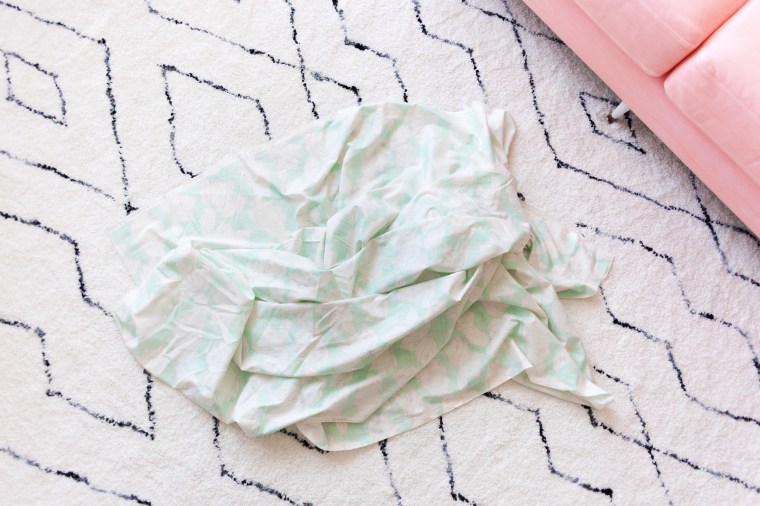
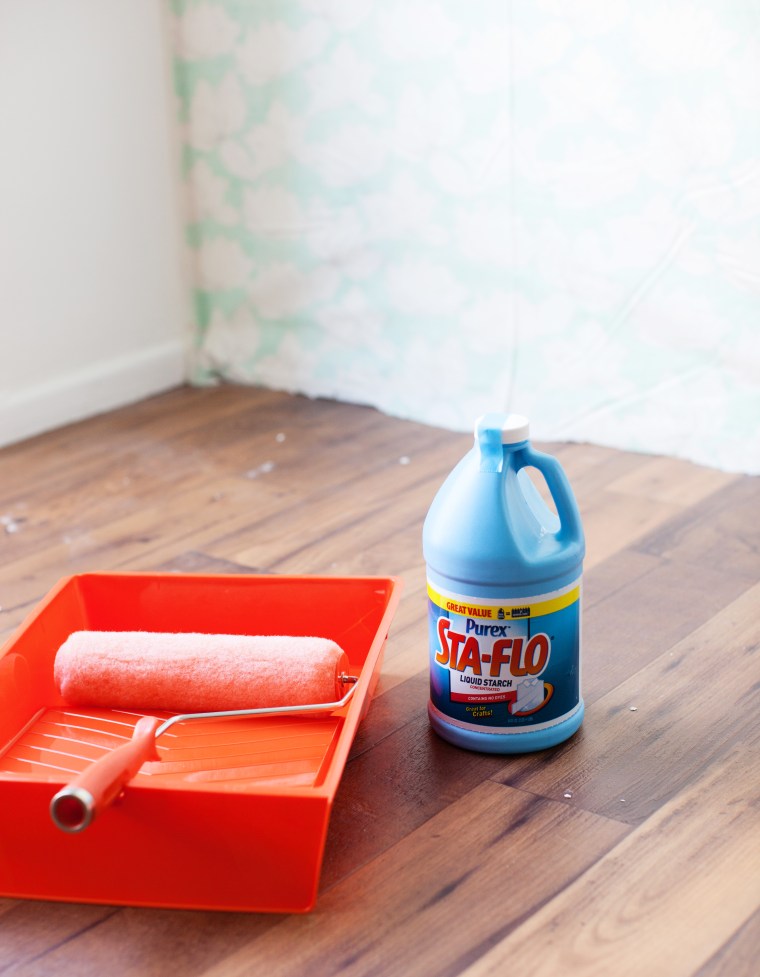
DIY Fabric Wall Treatment (2).jpgDIY Fabric Wall Treatment.jpg

First, I used push tacks to hang the fabric up on the wall. I tacked at the ceiling line and sides.

DIY Fabric Wall Treatment (3).jpg

Then I used a paint roller to apply the liquid starch to the fabric.
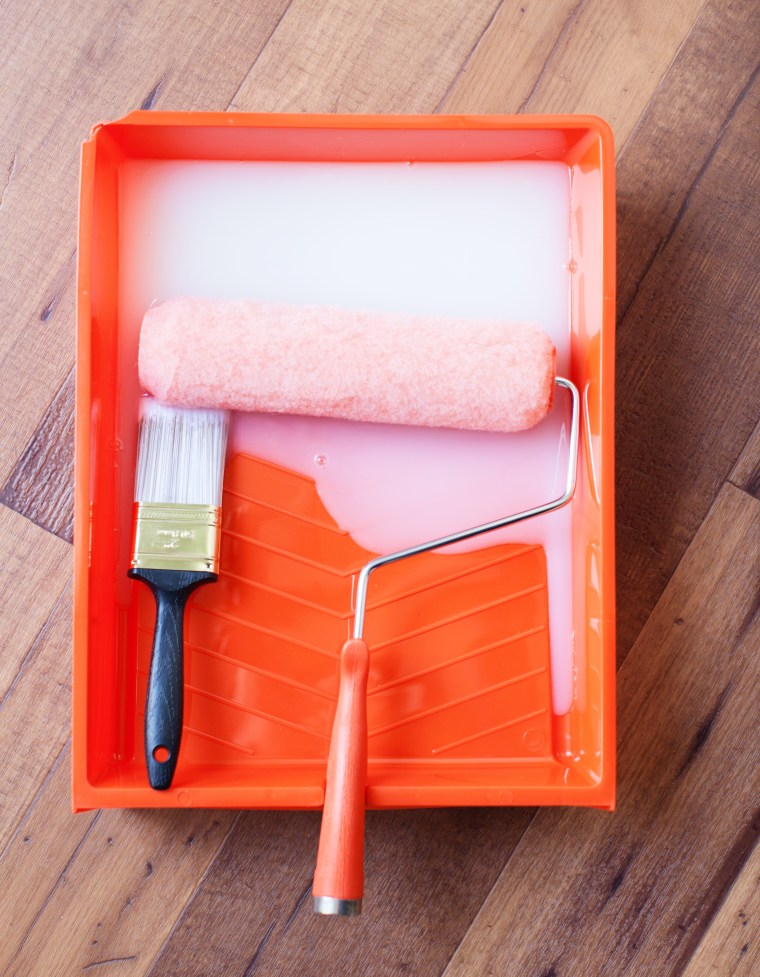
DIY Fabric Wall Treatment (4).jpg

DIY Fabric Wall Treatment (5).jpg

I started at the top, smoothing out air bubbles and wrinkles as I worked my way down. Make sure you saturate the fabric thoroughly so it sticks to the wall very well. I repeated the process for each piece, matching up the edges on the sides. This fabric had a label on one of the selvage edges, so I cut that off before applying it to the wall.
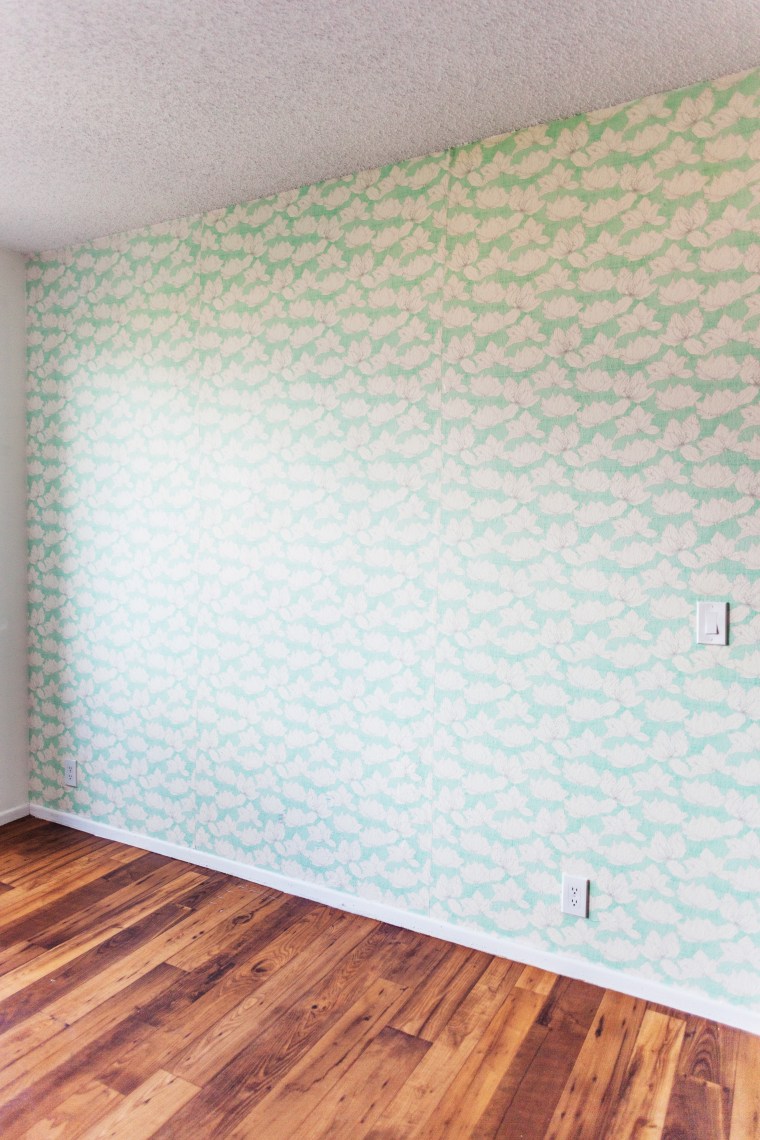
DIY Fabric Wall Treatment (6).jpg

Let it dry thoroughly for several hours. I let mine dry over night.

DIY Fabric Wall Treatment (7).jpg

Next, I used an exacto-knife to cut around the edges of the wall and around any details like air vents and electrical sockets. For any left over air bubbles, I just sliced them and re-saturated, then pushed any air out. DIY Fabric Wall Treatment (9).jpg

DIY Fabric Wall Treatment (8).jpg

That it! I was actually shocked at how much easier it was to do than I imagined. It took me a few hours but wasn’t as labor intensive as I anticipated. Here’s how it turned out!
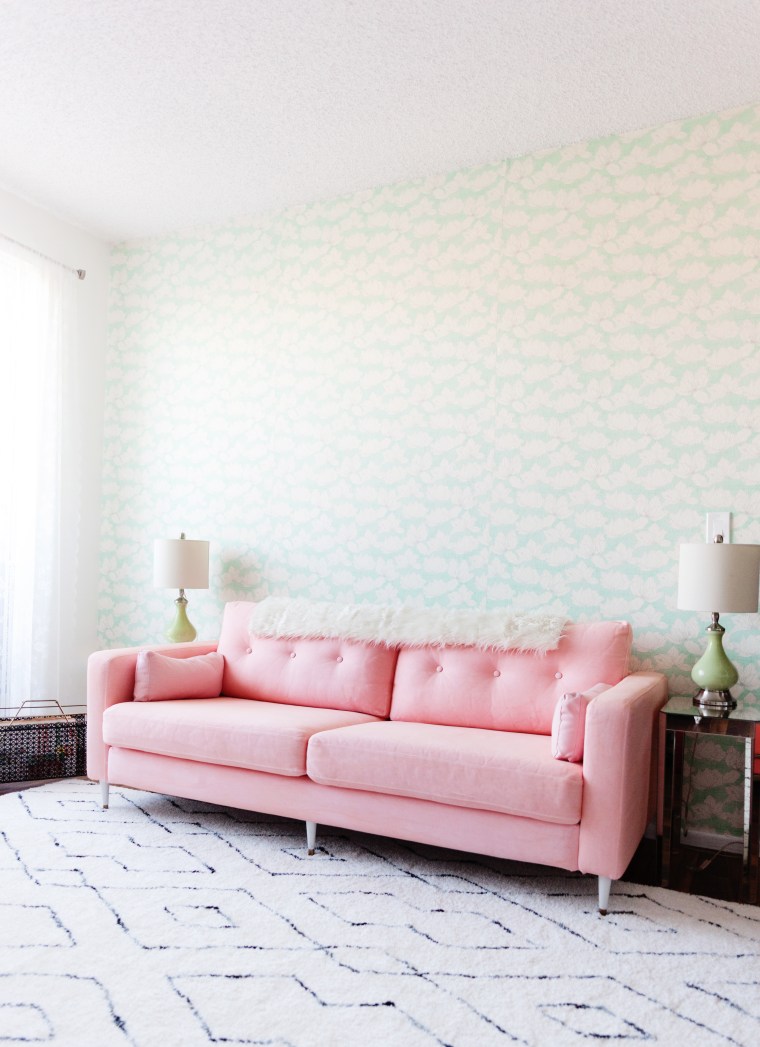
DIY Fabric Wall Treatment (12).jpgDIY Fabric Wall Treatment (11).jpg

IMG_5327-1.jpgDIY Fabric Wall Treatment (14).jpg

I love it! 

To remove it all you have to do is set a corner with warm water and peel it straight off the one in one piece. I actually removed a piece and put it back up on the wall because I didn’t like the placement. The best part is this fabric can be laundered and reused whenever I choose to remove it! 

Clean up is also a breeze. Just regular soap and water will do! 

Have fun! 
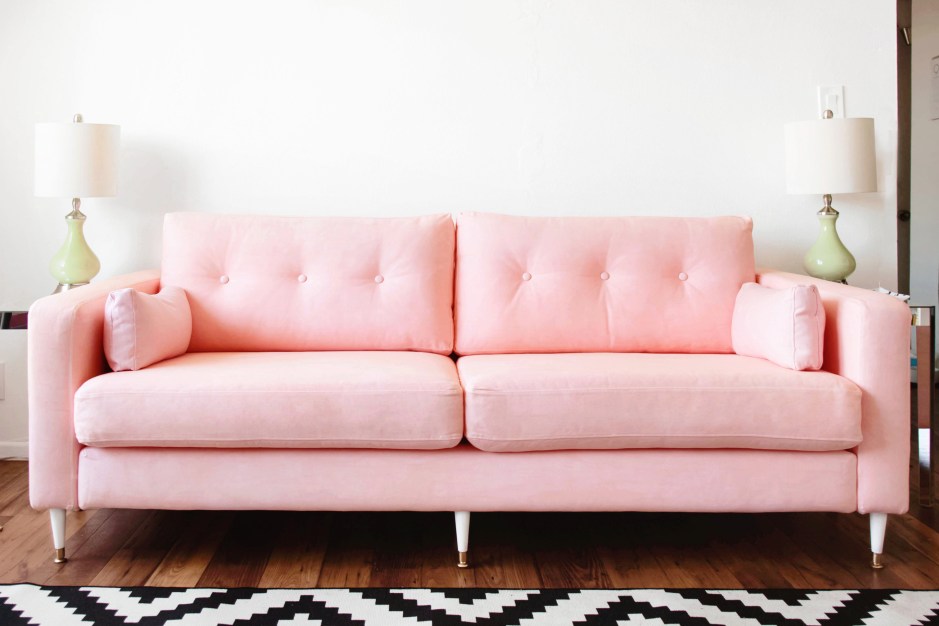
IKEA HACK: KARLSTAD Pink Mid-Century Inspired Sofa Makeover

Ohhhh man, you guys. I’m reallllly excited about this project. Bear with me because there’s a lot to cover (no pun intended).

A while back I posted about how I was on the hunt for a new sofa and narrowed down a few of my favorite contenders. One of the contenders was the KARLSTAD from IKEA because I knew I could save a lot of money by attempting a hack, and thanks to a pretty hefty tax audit (kill me) that’s what I ended up having to do. As luck would have it I found a perfect KARLSTAD at IKEA for $250 in the clearance section. A lot of you already know that I’m no stranger to IKEA Hacking, but it has been a while since I did one so I was feeling up to the challenge. Luckily it didn’t take long before I knew exactly what I wanted to do in order to make it come close to the couch of my dreams.


KARLSTAD IKEA HACK

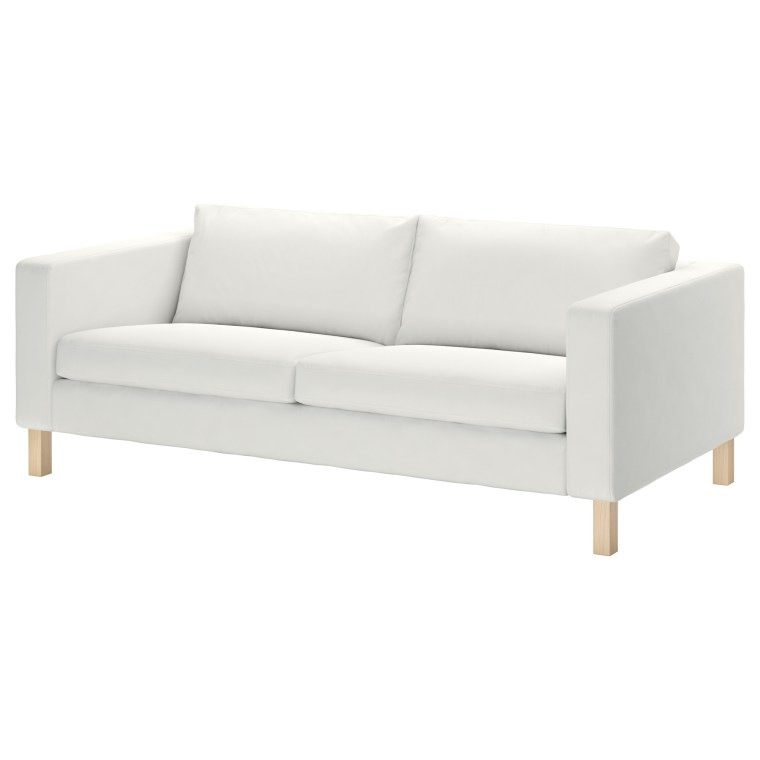
The KARLSTAD is pretty much an IKEA staple and I’m sure you’ve seen it in many homes. It has clean, modern lines and comes with an easily removable slip cover. Perfect for my hacking plan. The one I bought had a grey cover and my IKEA was sold out of the white slip cover, but luckily my best friend in Florida found one at her store and was able to send it to me. Since KARLSTADs have completely removable slip covers I knew I could dye it to be whatever color I wanted.

Rit Petal Pink

I picked up a few boxes of Rit dye in Petal Pink. I filled my bathtub with boiling water and dye and soaked the slip cover until it was saturated.Dye Sofa Slip Covers in Bath Tub Then I promptly had a minor freak out because it didn’t turn out the rosey/peachy/blush pink color that I wanted and that appeared on the box. Dye Karlstad Sofa Slip Cover

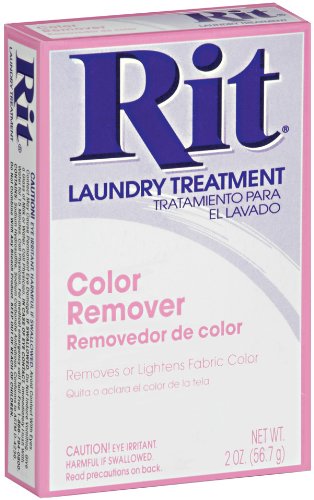
I took a deep breath, refusing to be defeated, and rushed to the fabric store to grab some Rit Color Remover, a magical powder that  gently removes all of your regrets and gives you a clean start. If only I could bathe myself in it. Just kidding…!

510qf1gmr3l

How to remove Rit dye

After a quick soak the slip cover was back to white. I knew at this point I was going to have to custom mix my own shade of pink so I threw the covers in the wash and went back to the fabric store for the 5th time to pick up more dye.

I can’t tell you the exact ratios of these colors that I used for my shade because I was constantly adjusting and testing the color. I want to say it was something like 4 parts pink, 1/2 part yellow, 1/8 part tan, but I’m not 100% sure so don’t come back yelling at me if yours turns out gross. I also diluted it a lot more than the first time so the color would be more pastel.

My husband and I worked nervously and quickly, scalding our hands and sweating over the boiling dye bath in our typical Melo-dramatic style, but it was worth it. It worked out perfectly!img_4426-3


Dying the slip cover was only the first step. I wanted new legs and pretty tufting, and dammit that’s what I would get. These steps were actually much easier and less annoying than the dye part.

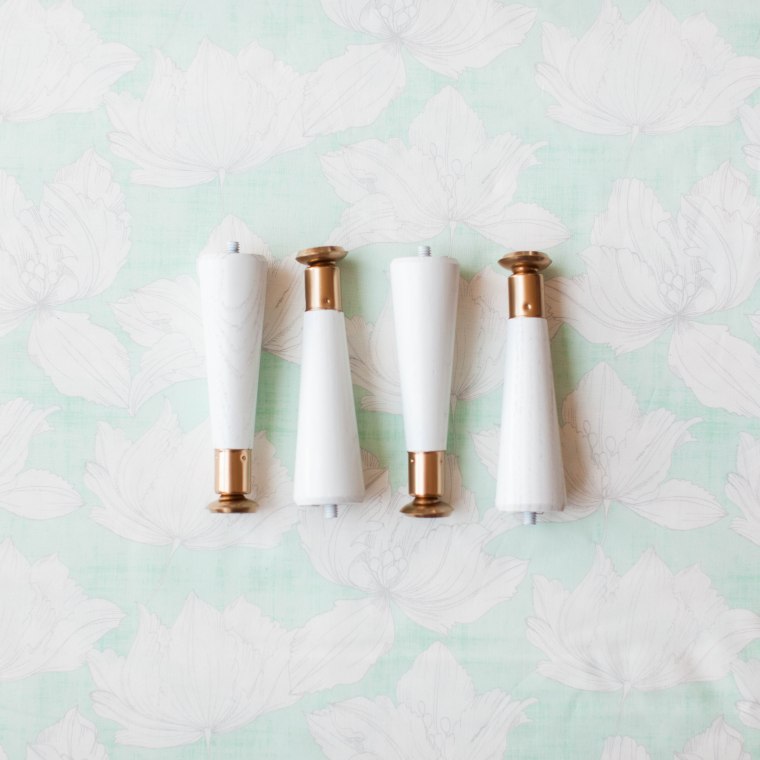
I changed the legs on my last KARLSTAD Love Seat in the past, so I knew that wouldn’t be a big deal. I used mid-century style furniture legs that I got from Lowe’s for like $2 and spray painted them gold and white.

DIY Furniture legs for $2

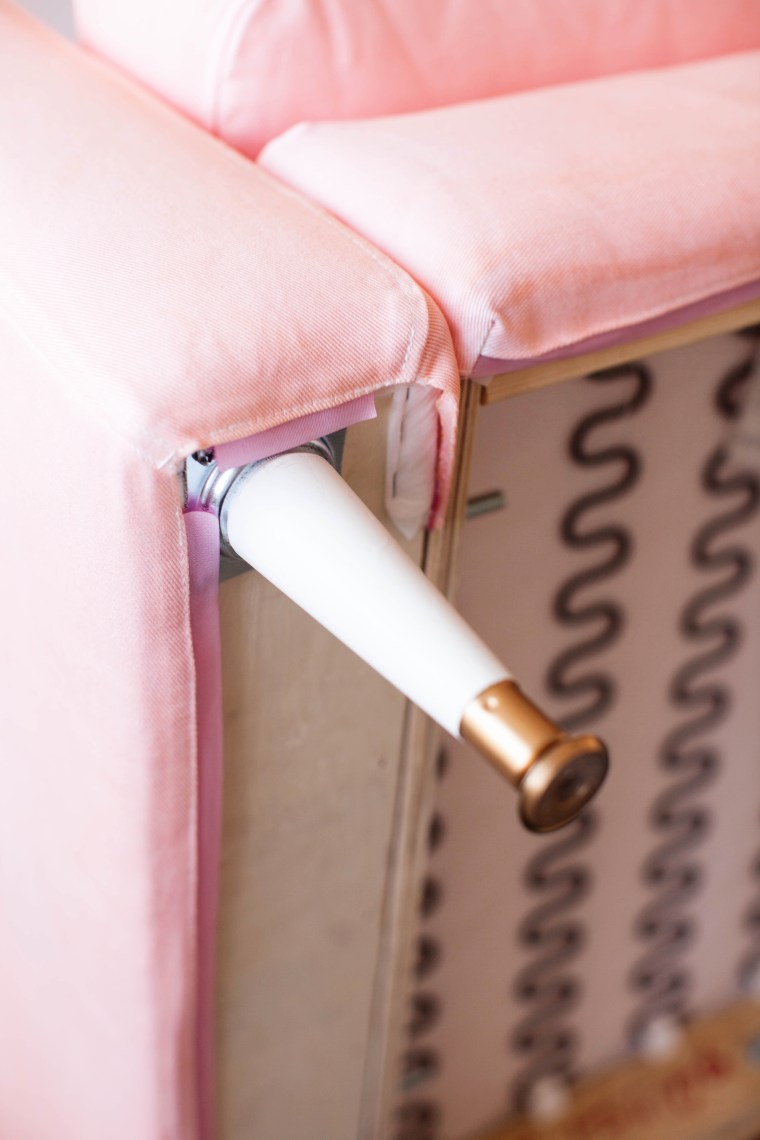
Then I installed a top plate and attached the legs to the corners of the sofa.

Change the legs on your sofa for under $20I wanted to have legs in the center of the sofa, too. Partly for more support, but mostly because I like the look of it.
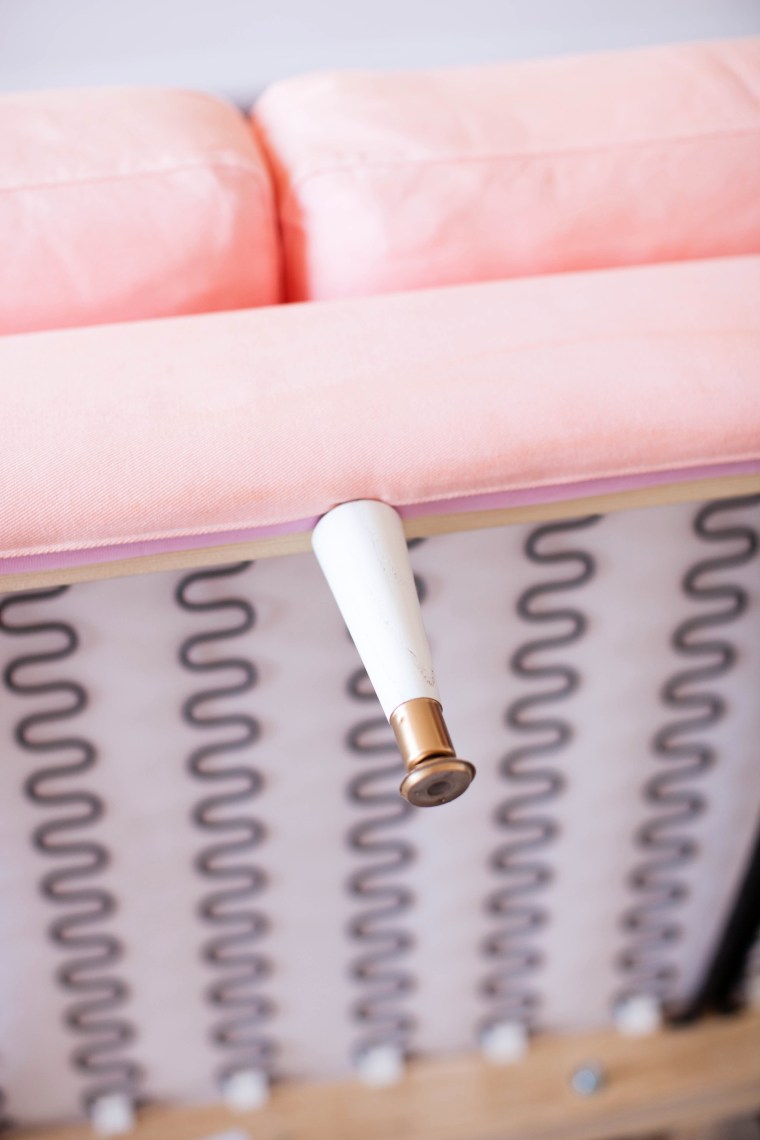
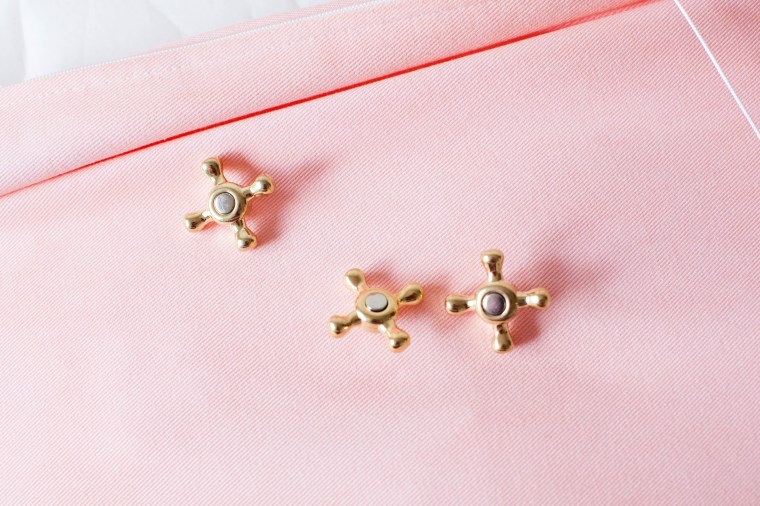
For this I just drilled a hole and inserted the leg directly into the wood.

Change the legs on your sofa for under $20

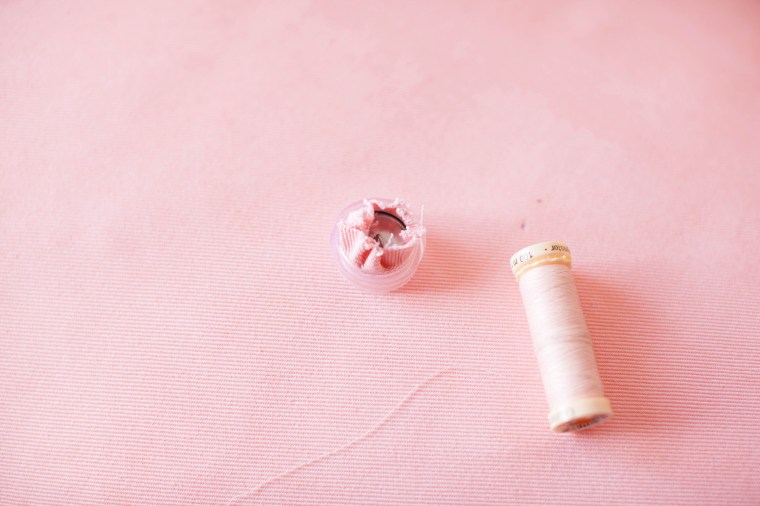
That would have looked great on it’s own but I wanted tufting. I had spare fabric from an extra piece of slip cover that I found in the clearance bin at IKEA. I used this for my color test strips and then dyed a piece with the plan of covering buttons for tufting.

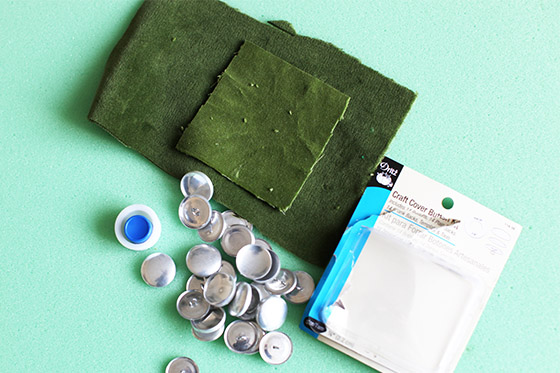
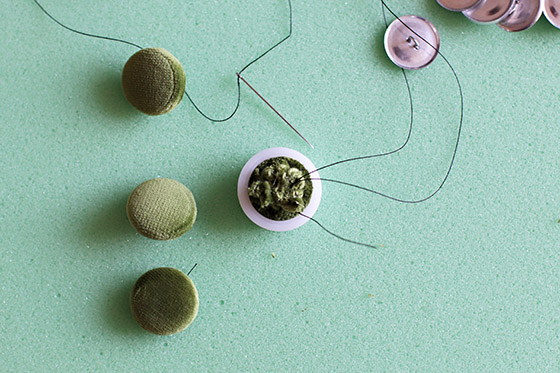
I used 7/8″  button cover kit and thread to make my tufting buttons, much like I did in this past IKEA hack.DIY Upholstery Button Covers

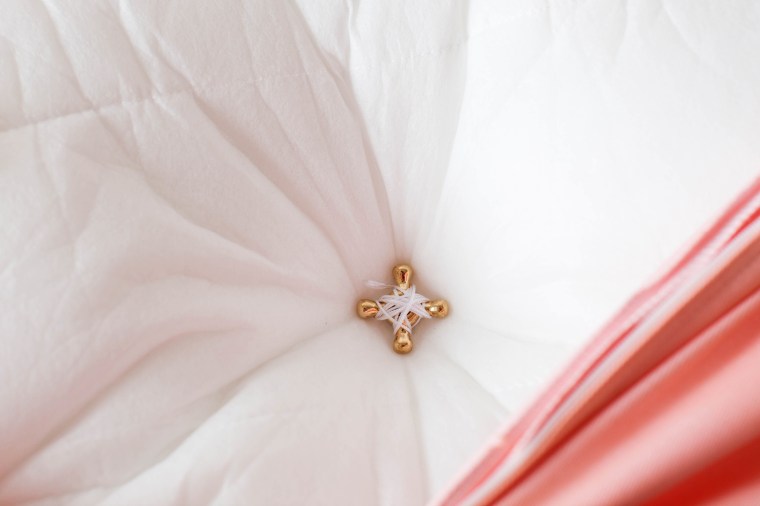
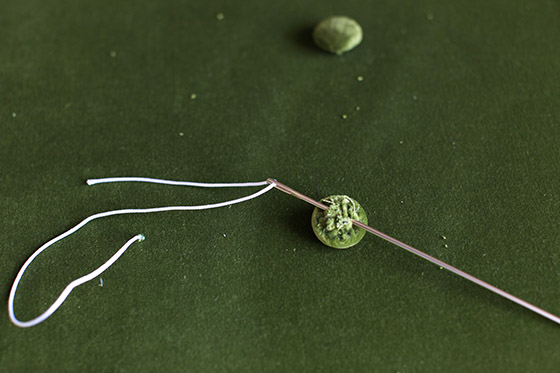
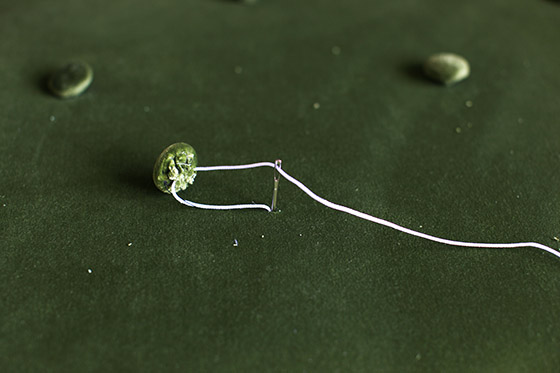
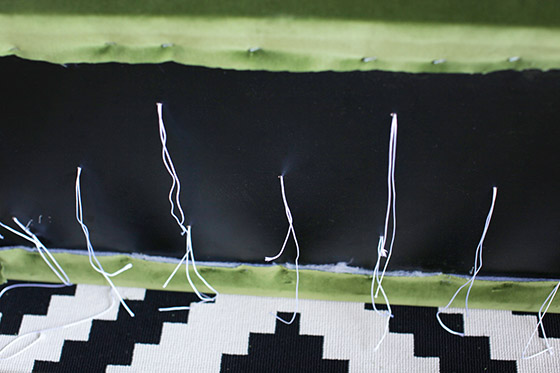
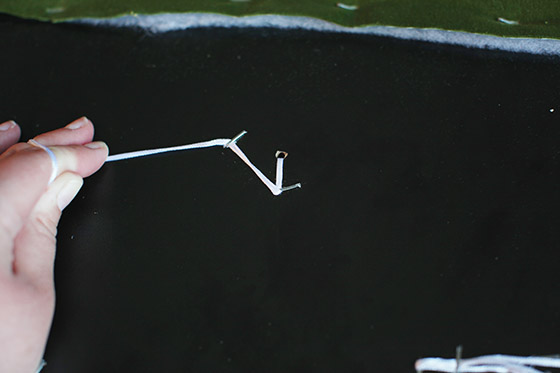
Then I attached the buttons to upholstery string and used a long upholstery needle to feed the string through the cushion. I pulled the string tight and used these decorative buttons to anchor the string on the back of cushion. I didn’t want to go through the back of the cushion cover, and a knot would have just pulled back through the cushion insert, so I used the decorative buttons to hold my tufting in place. Am I making any sense at this point? Hopefully these visuals help.DIY Couch Cushion TuftingDIY Couch Cushion Tufting

And voila!

KARLSTAD SOFA IKEA HACK: Mid-Century Inspired Pink Sofa

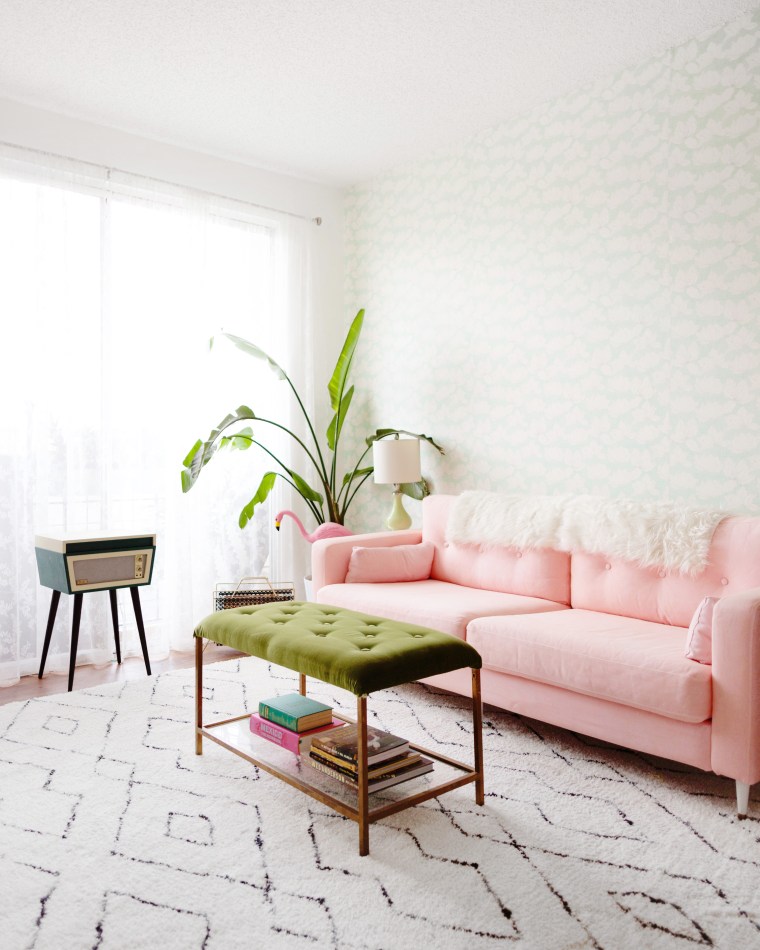
The decorative pillows are also from IKEA.KARLSTAD SOFA IKEA HACK: Mid-Century Inspired Pink SofaI love the way the warm pink looks with the white and gold legs.KARLSTAD SOFA IKEA HACK: Mid-Century Inspired Pink SofaI’m so excited to finally have a dreamy pink couch! And for less than $300!KARLSTAD SOFA IKEA HACK: Mid-Century Inspired Pink Sofa
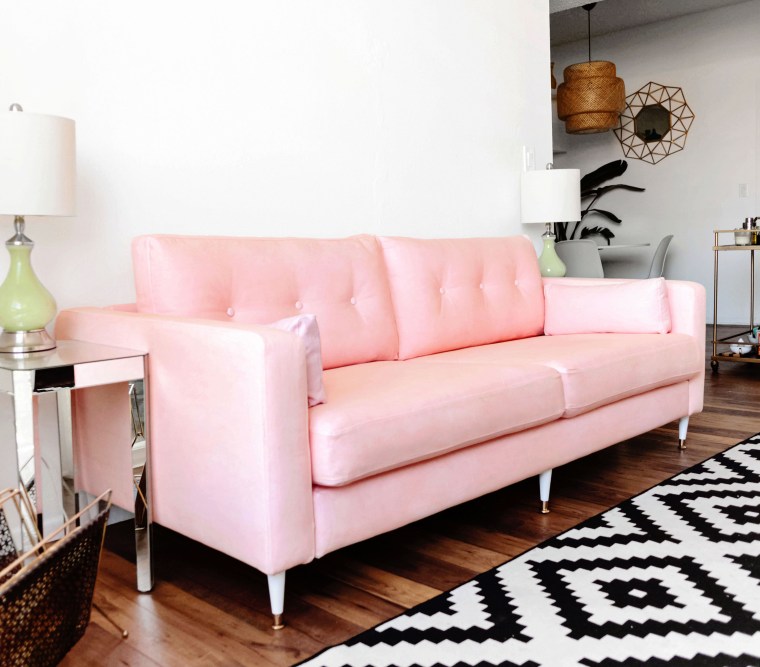
Update: Here it is in the finished room!

7


DIY Yellow Fringe Blackout Curtains

You guys, let me start by saying I’m bummed because I lost all of the how-to pics from this project when my old computer died, BUT I still wanted to share how easy it is to make your own curtains.

I couldn’t find any light blocking curtains that I liked for my bedroom so I took on the task of making my own. Curtains are the easiest thing to make if you can sew a straight line. All you need is enough fabric to make a panel long enough to fit your window and hem all four sides, leaving a big enough loop at the top to fit a curtain rod through. I found a really nice and inexpensive fabric in the perfect shade of buttercup yellow, but the problem was that it was too thin and let a lot of light through. We’re not morning people so this was a no-no. To remedy the problem all I did was lined my fabric with an old black out curtain from IKEA. Easy enough!


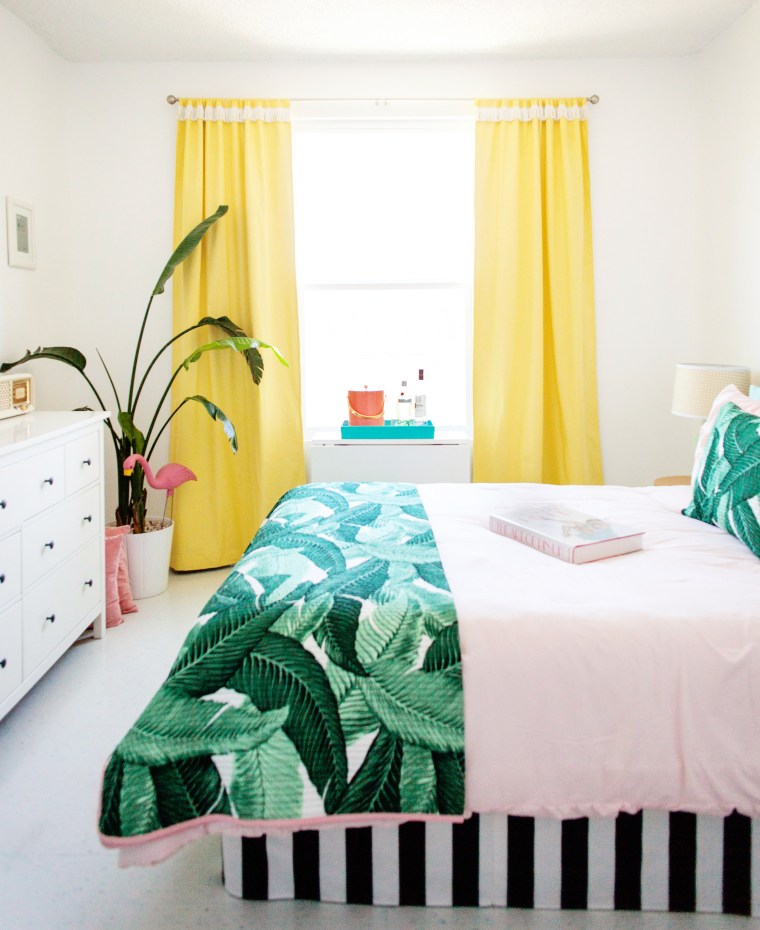
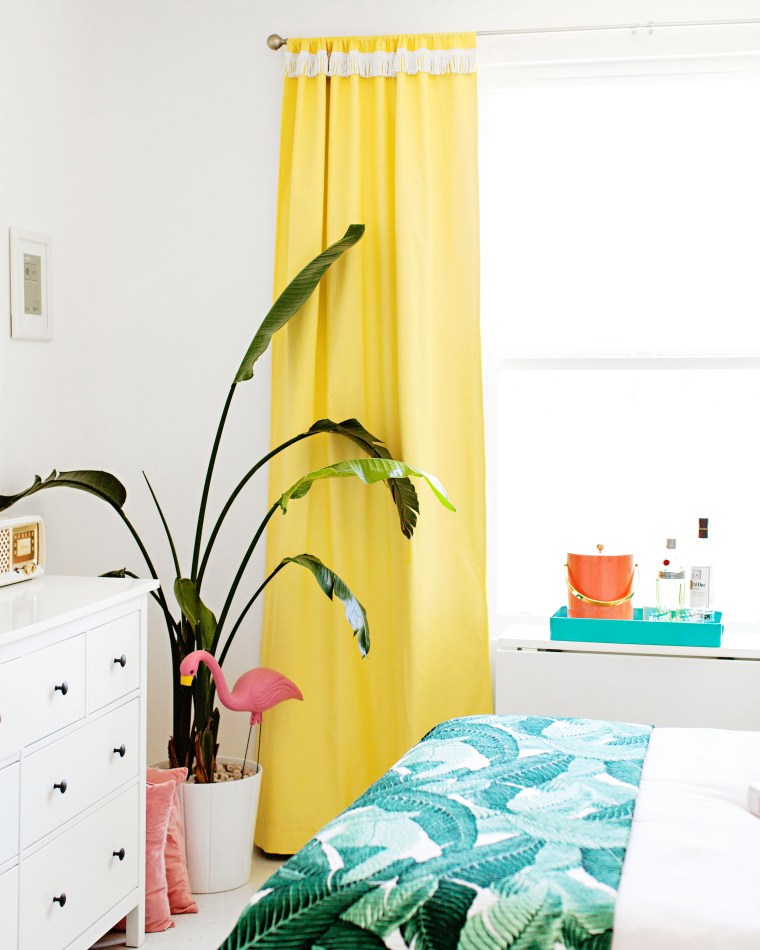
IMG_4254.jpgDoing that completely blocked any light from coming into my bedroom and also added some much needed weight and heft to the panel.
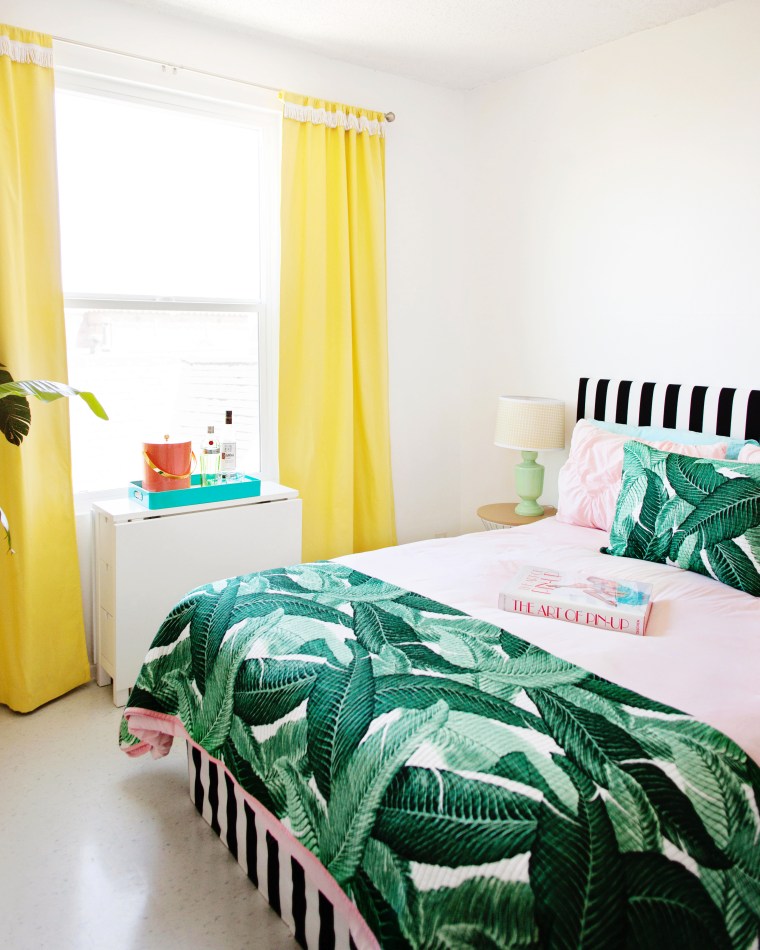
IMG_4264.jpgFor some extra flair I added a strip of vintage looking rope fringe to the top.IMG_4270.jpg
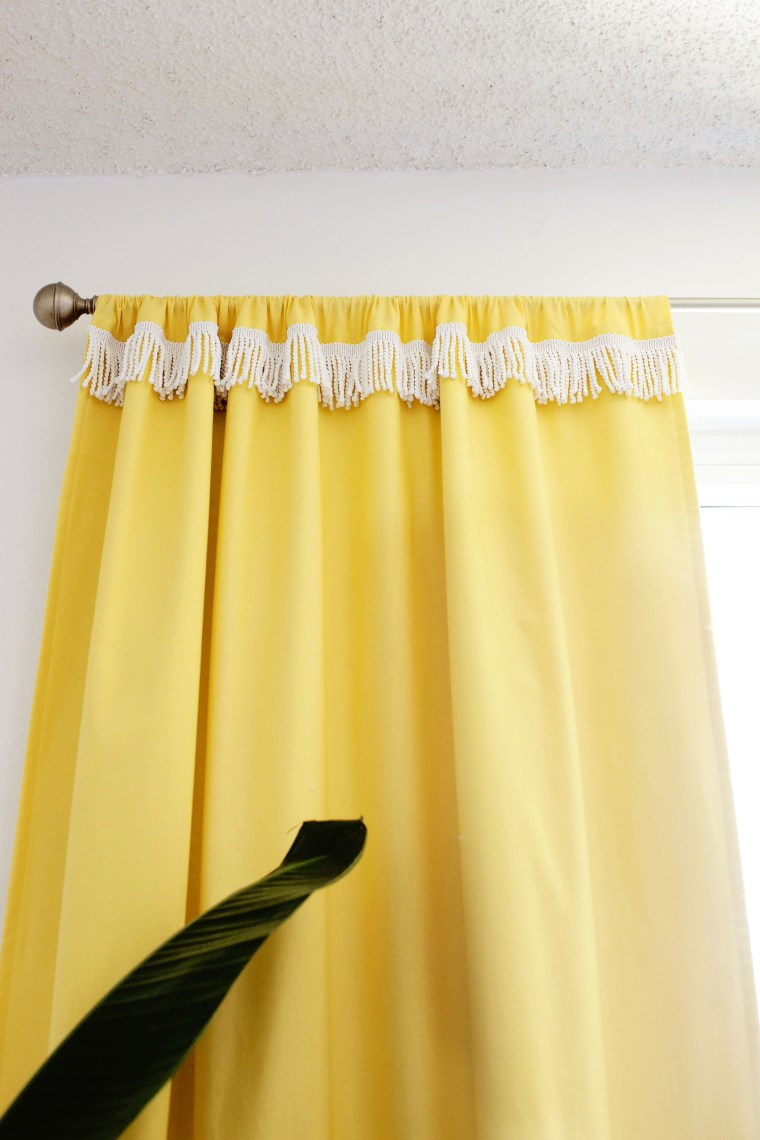


IMG_4252.jpgTada! Stay tuned for more bedroom decor updates and be sure to follow along on Instagram.
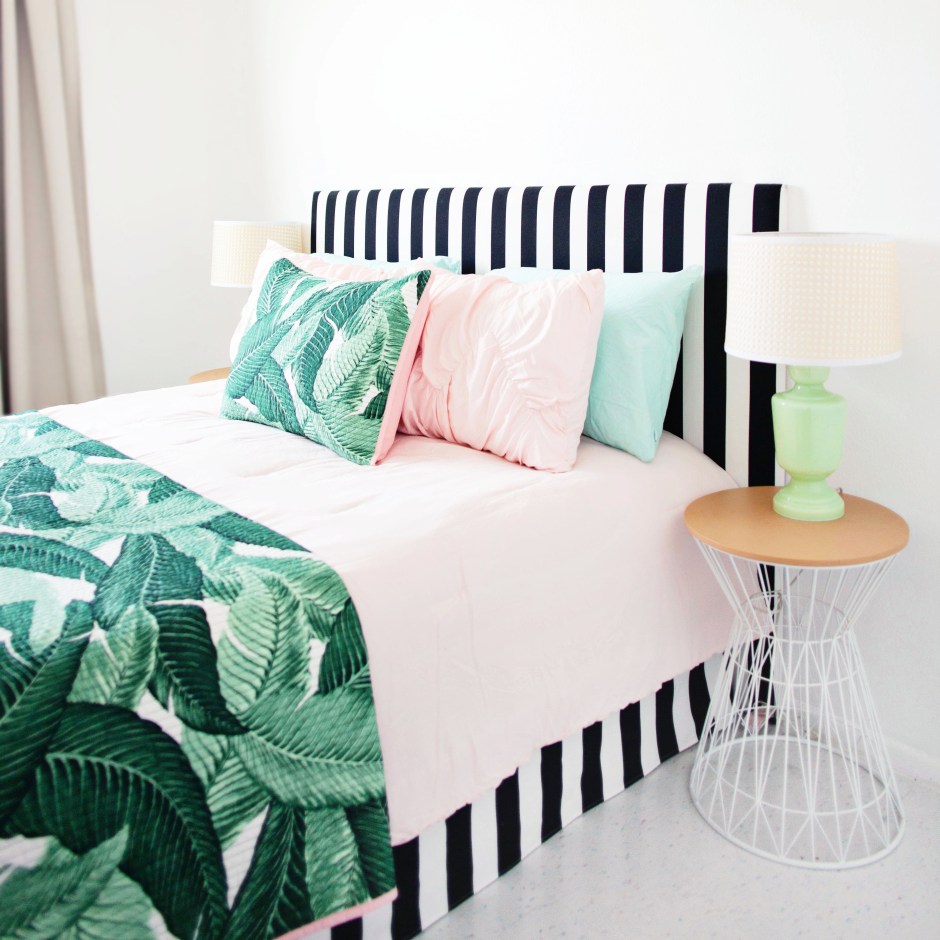
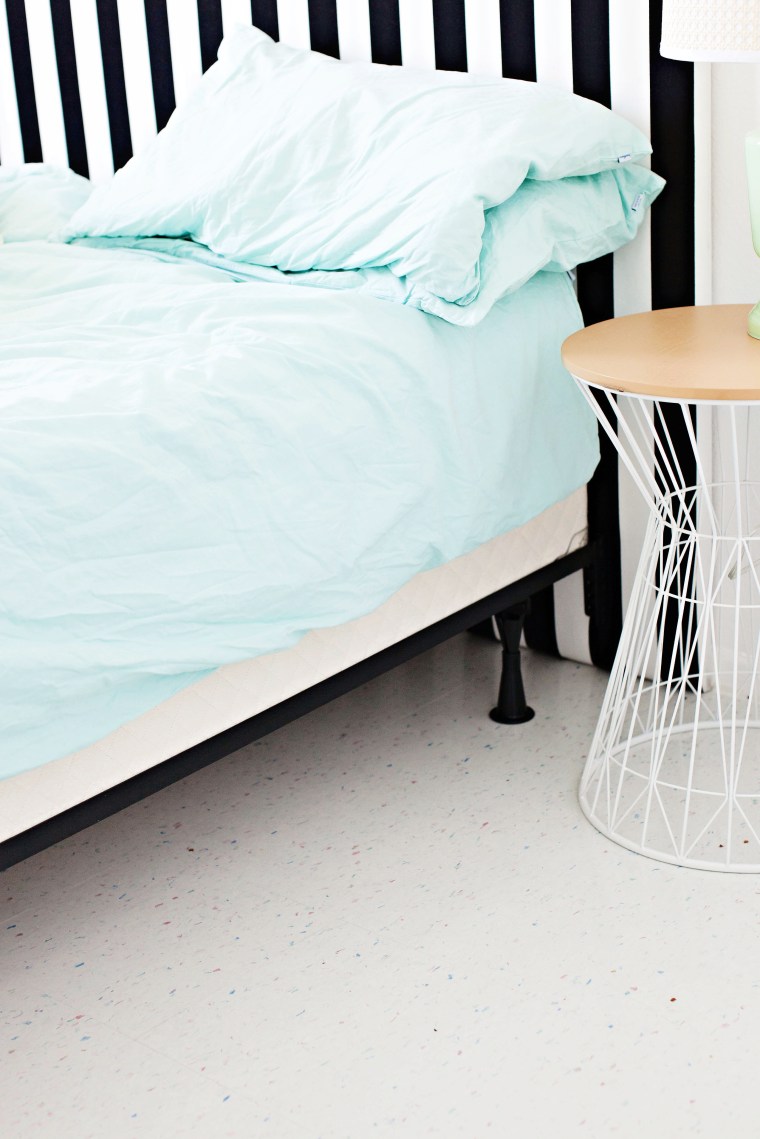
DIY Striped Bed Skirt and Headboard

If you would have told me that finding a bed skirt would be the most difficult part of my bedroom makeover I wouldn’t have believed you. I thought I would just be able to pick up your run of the mill white skirt at any home goods store and be done with it. Nope. Of course not. Story of my life.

I had to exchange 3 bed skirts before deciding I was better off making one on my own. Either they were too short, too long, too sheer, or the wrong color. Who knew?! Luckily making your own custom bed skirt isn’t as hard as it may seem.

First of all, I wanted it to match my new DIY headboard so I picked up the same striped fabric from IKEA. The headboard isn’t really new, it was previously used as the backboard to my dining room banquette IKEA hack. The fabric for the bed skirt cost me about $16, much cheaper than bed skirts I was finding in stores.

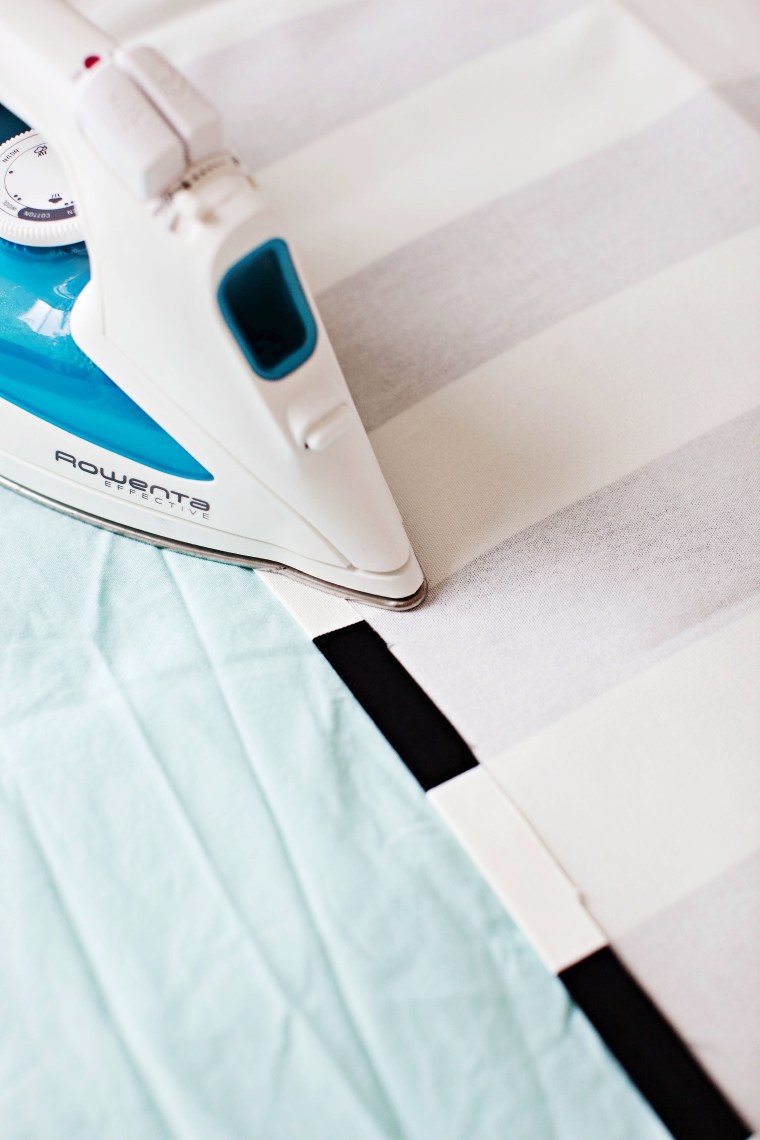
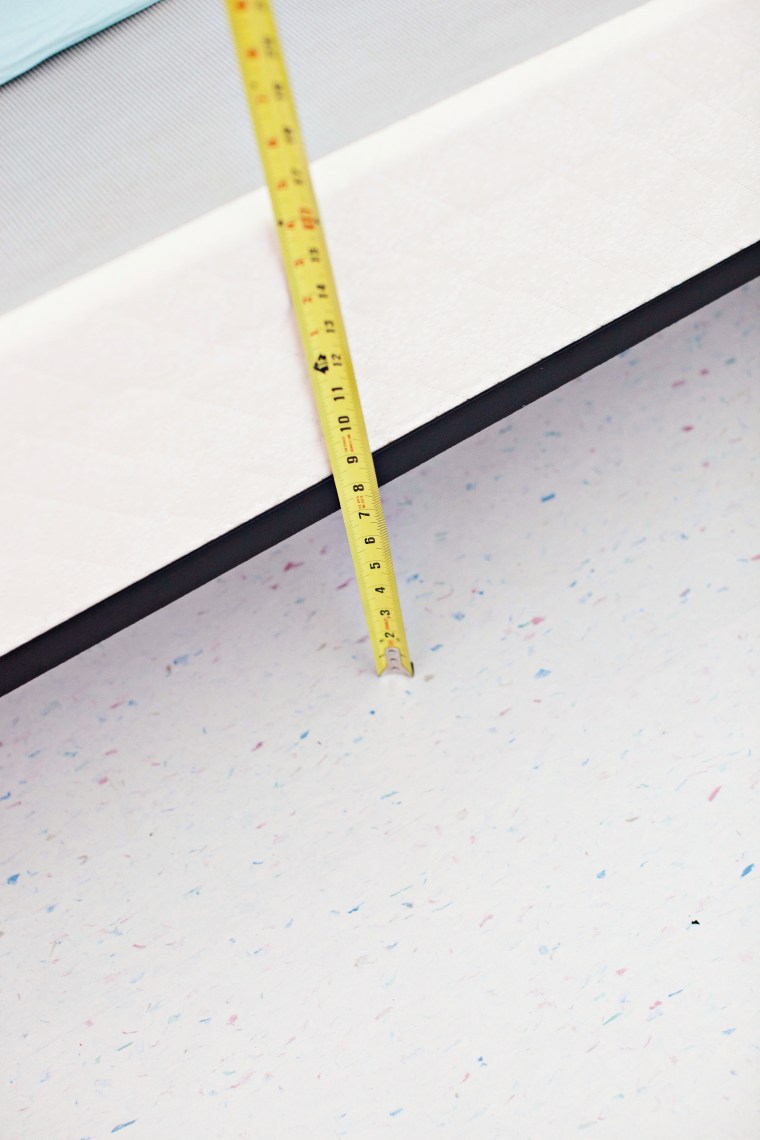
DIY Bed Skirt TutorialThe first thing you need to do is figure out how long your skirt needs to be. Measure the distance from the top of your box spring to the floor. Then add 3-4 inches for seam and stapling allowance.DIY Bed Skirt TutorialMine was at 16 inches, so I cut 20 inch long strips of fabric. The fabric is 58 inches wide, so I needed 3 of these strips in order to cover 3 sides of my box spring.DIY Bed Skirt TutorialNext you need to make the hem. Fold over the long edge at 5/8″ and press.DIY Bed Skirt Tutorial
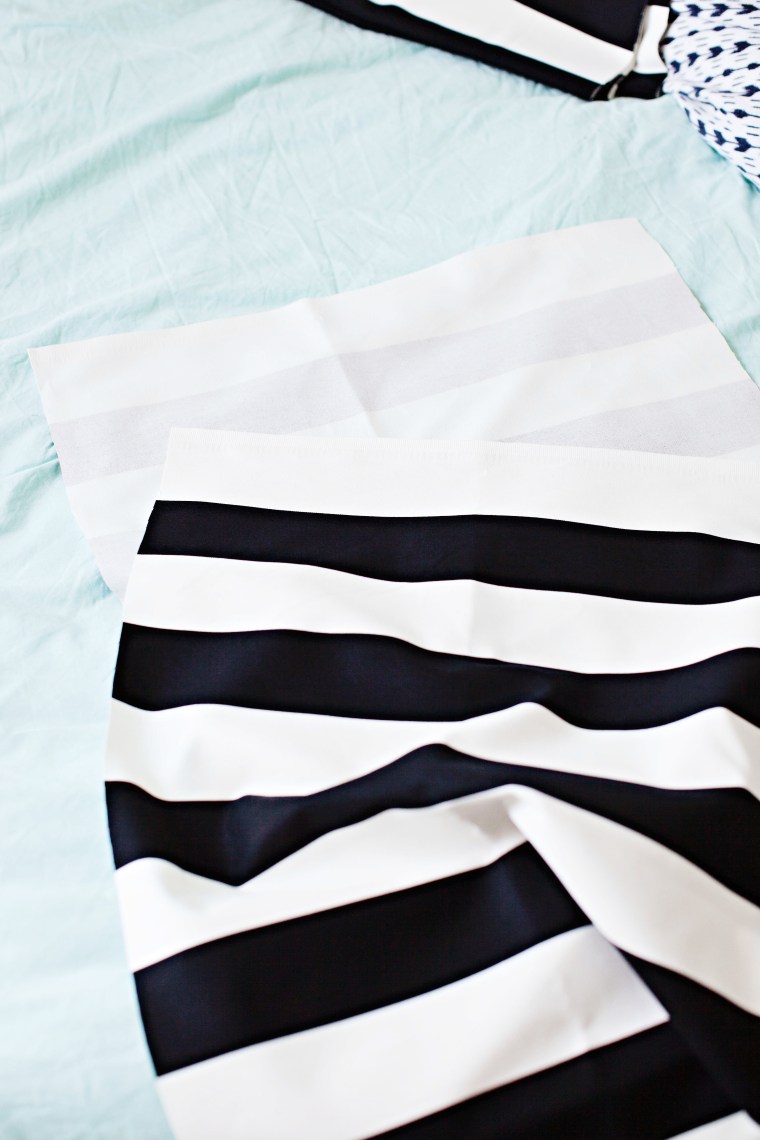
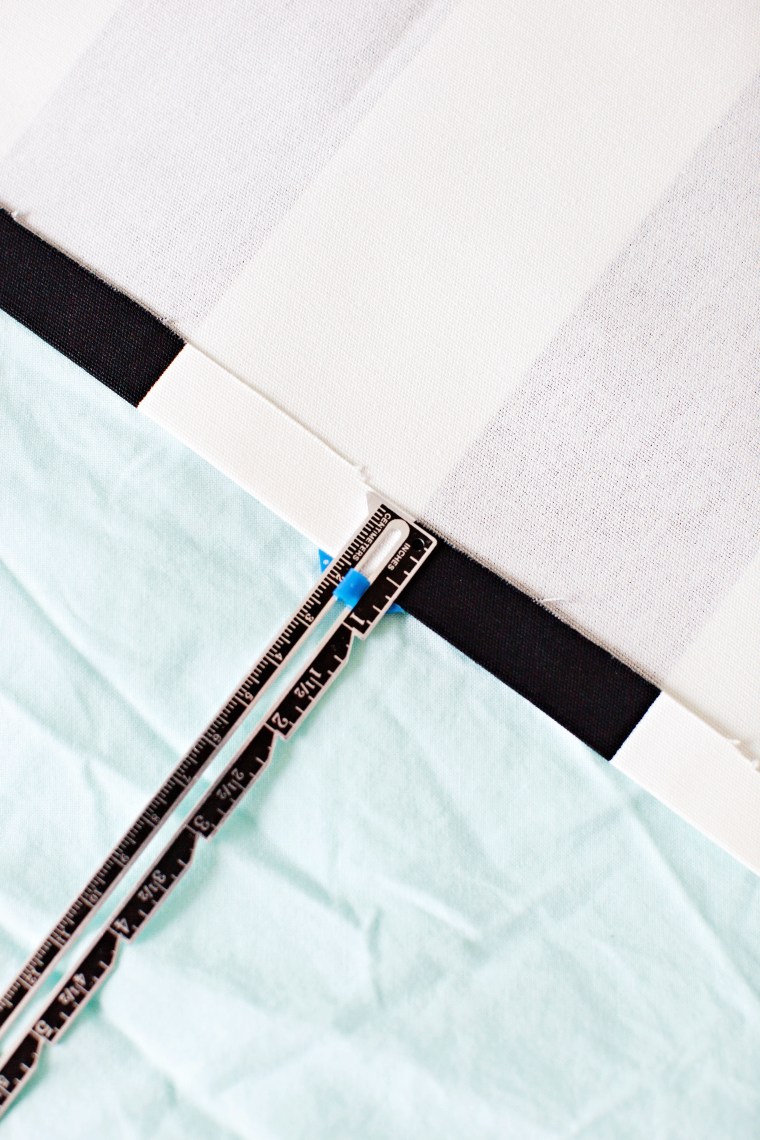
DIY Bed Skirt TutorialThen fold the raw edge under itself and press again.DIY Bed Skirt Tutorial This creates a nice clean hem. Stitch at 3/8″. If you don’t have a sewing machine you can use iron-on hem tape.
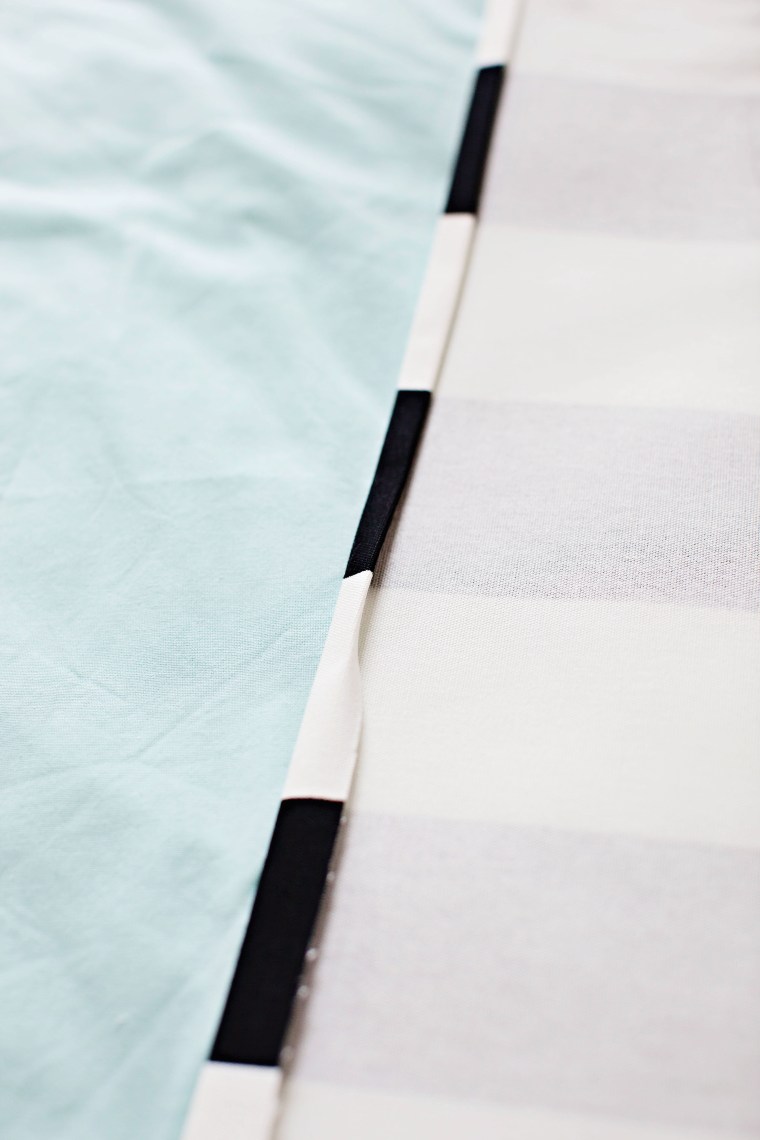
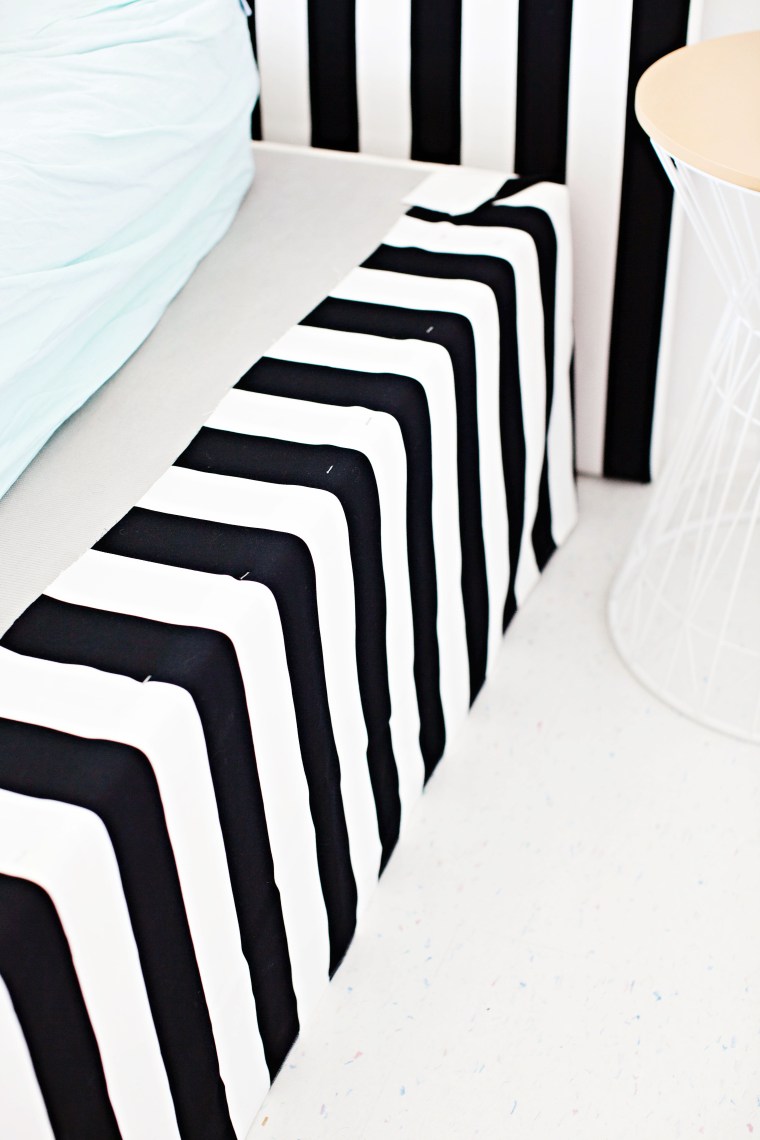
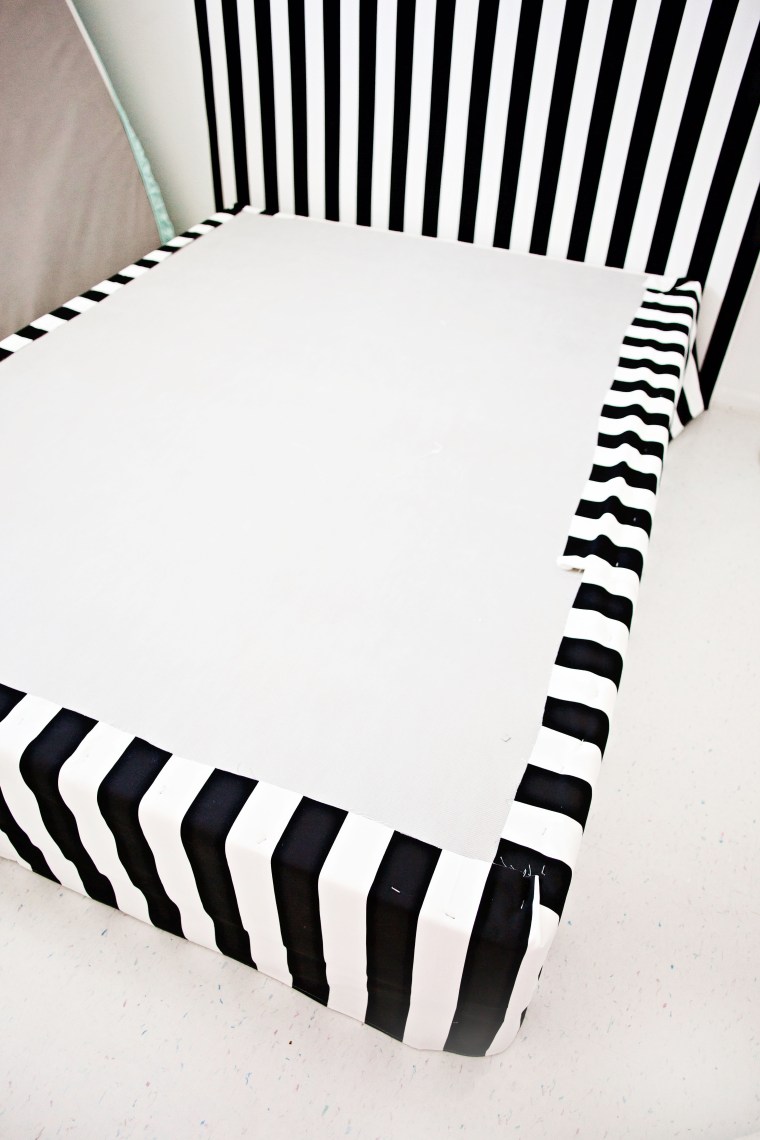
 

Once that is done, stitch the strips together at the ends to create one long strip. Then staple the raw edge directly to the box spring, making sure the hem just barely touches the ground. If you don’t have a staple gun you can use flat head tacks. 

DIY Bed Skirt TutorialDIY Bed Skirt and Headboard TutorialContinue all around the box spring. The mattress should cover the staples and it’ll look like a normal bed skirt!
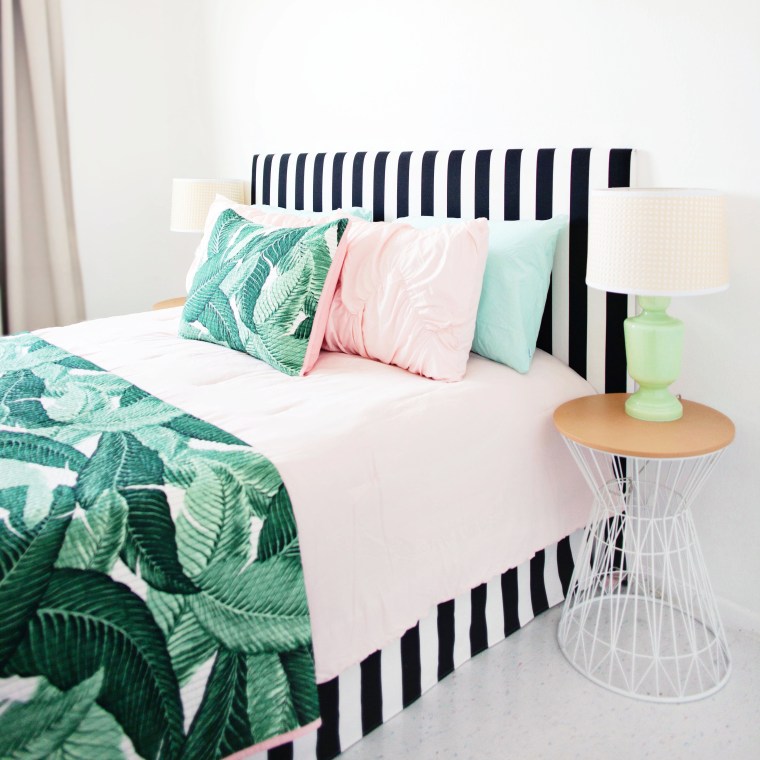
 

DIY Bed Skirt and HeadboardFinally, make your bed as usual and reward yourself with a nice nap.
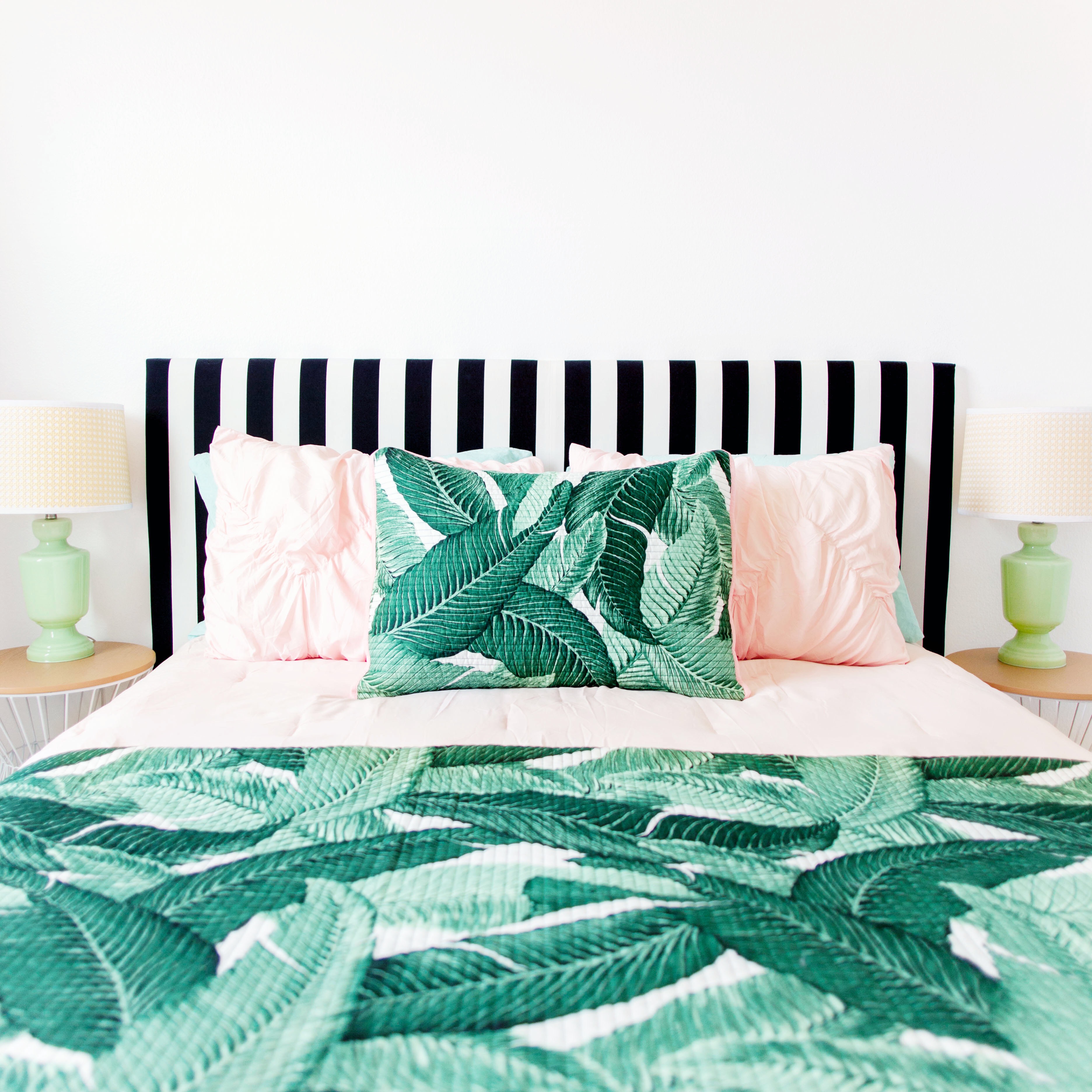
For instructions on how I made the headboard, click here.

DIY Decor: Metallic Gold IKEA EKBY BJÄRNUM Bar Shelves

One of the main challenges I always have while decorating my apartment is finding the decor I envision, at the prices I want. Neither of those are ever easy. Either I can’t find what I have in mind, or when I get close, somehow it’s the most expensive item in the store. I can drool over those high ticket items all I want, but let’s get serious, I’m no Rockefeller.

But it’s ok! This is where my handy-dandy DIY skills get to shine. This is where I get to do my favorite task of trying to figure out how to get the look I want for as little money as possible.

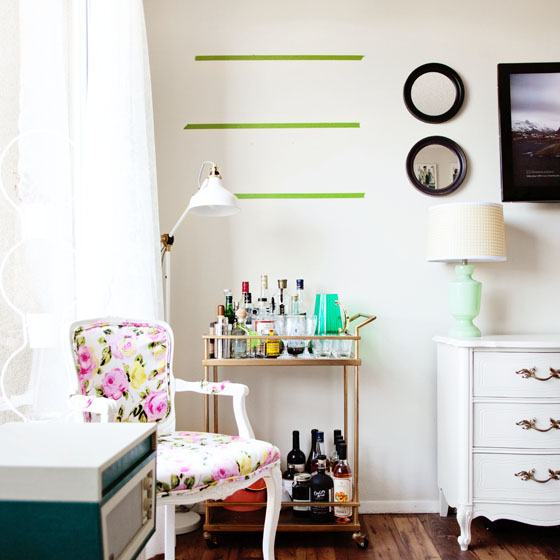
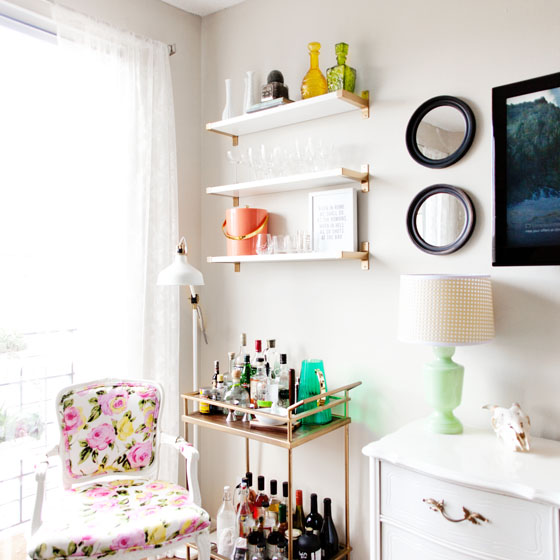
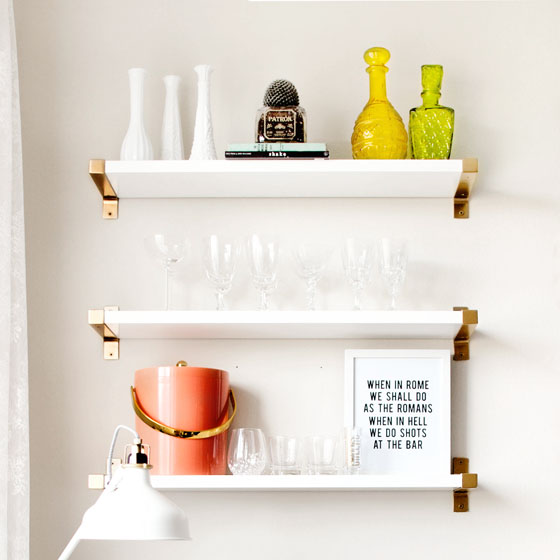
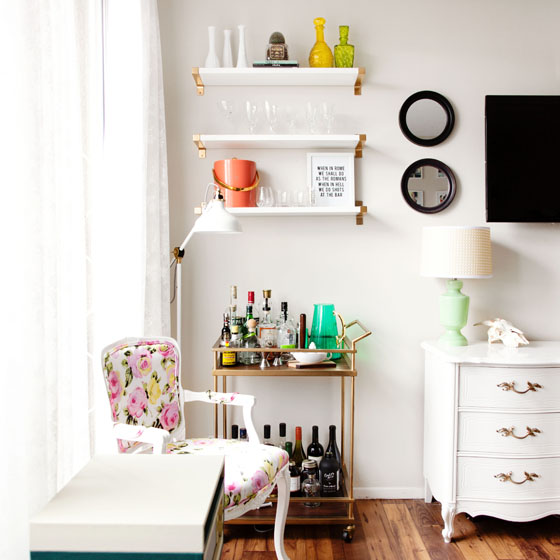
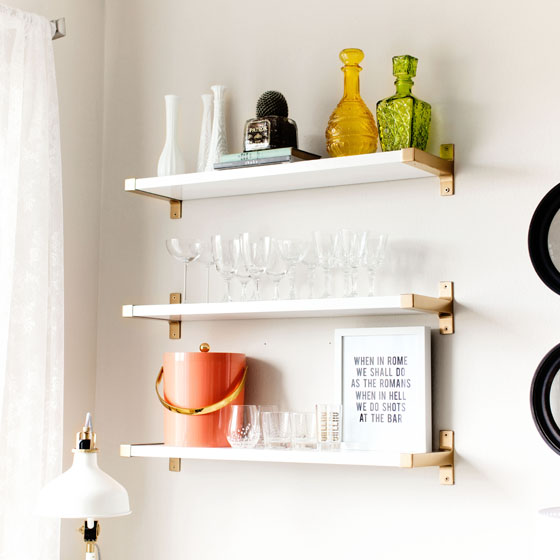
DIY Gold IKEA Bar Shelves For example, I wanted to expand my home bar area by adding 3 shelves above my bar cart. I wanted them to be gold to match said bar cart. My search pretty much turned up empty except for one option that was almost the right dimensions (from a store that will remain nameless) for over $100 per shelf. My other option was an IKEA favorite of mine that I’ve been keeping my eye on for a bit, and it just so happens that the EKBY JÄRPEN/EKBY BJÄRNUM combo was the perfect size, style, and price I was going for. The only drawback was that the brackets are only available in aluminum. Womp, womp.

EASY FIX.

DIY Gold EKBY BJARNUM IKEA Shelves via MelodramaThe right choice for me was clear and I’m glad I made it. Did I want to spend $300 on shelves from Unnamed Store, or around $60 for IKEA shelves and a can of spray paint? Um. DUH. The way I see it is if I can spend $60 total on a DIY version and use the extra $200+ toward other fun things like going away for the weekend or, I dont know, paying my bills, you’re damn straight I’m taking that route.

DIY Gold IKEA BJARNUM Shelves via MelodramaLet’s all just take a moment to reflect on the magic of spray paint. All I did was spray the brackets and screws with metallic gold chrome paint and it completely changed the vibe of the shelves. Done and done. So easy.

DIY Gold IKEA BJARNUM Shelves via MelodramaI styled them with the help of my growing glass and bareware collection, and a DIY framed print.

DIY Gold IKEA BJARNUM Shelves via Melodrama

Shelves: IKEA
Paint: Montana Gold – Metallic Goldchrome
Glassware: Baigelman Glass, Crate & Barrel, Target, Vintage
Bar Cart: Target
Chair: Vintage DIY
Floor Lamp: IKEA
Dresser: Vintage DIY
Lamps: Target

DIY: Stenciled “Welcome To The Shit Show” Door Mat

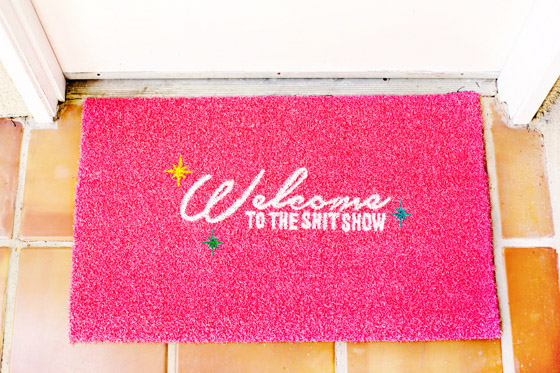
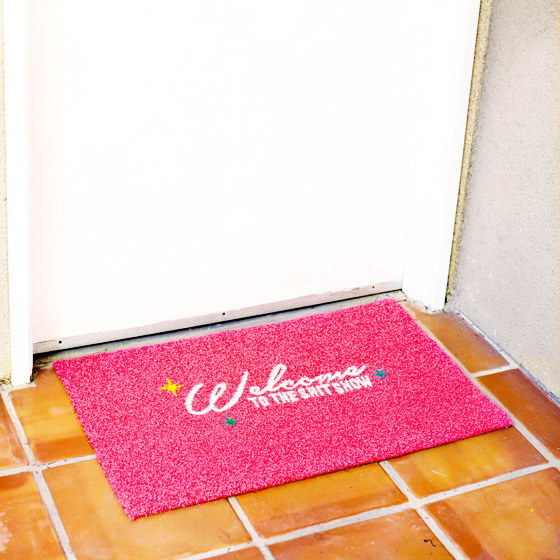
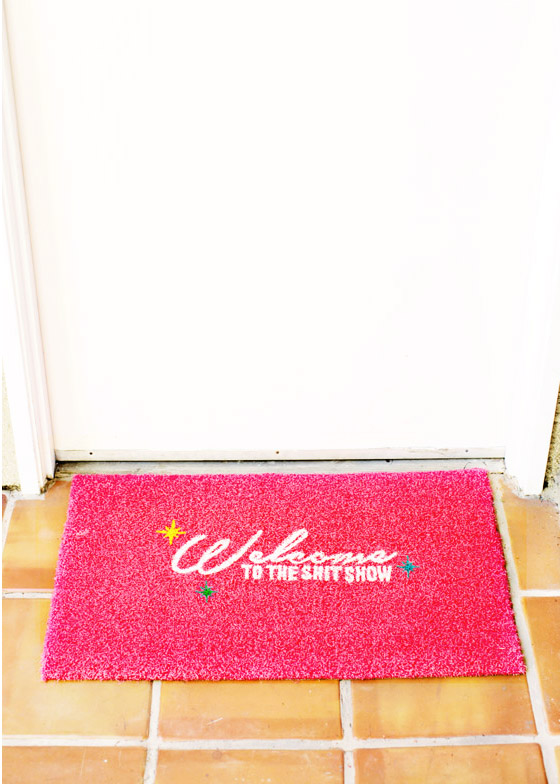
I’ve been in need of a new welcome mat for like a year now, but I haven’t found the right one that I loved enough to invest in. Luckily I spotted these colorful and inexpensive door mats at IKEA. I knew I could probably stencil my own design onto it, and for $8 I really had nothing to lose. It turned out perfectly and it’s totally me.

I couldn’t think of a more (in)appropriate way to welcome guests into my home than with “Welcome to the shit show”. There always ends up being something weird or unexpected happening when we have people over, so this is basically a fair warning of what you’re getting into when you come over.

DIY Stenciled Welcome MatTo make this happen, I had to first make a stencil. I printed my letters out and then used an exacto knife to cut the letters out of pieces of card stock.

DIY Stenciled Welcome Mat Tutorial

DIY Stenciled Welcome Mat TutoriallI repeated a letter in the beginning of each new stencil so I could align it with the last letter stenciled. That way everything would be in line properly.

After I decided where I wanted the stencils to go, I just taped them to the mat and used a sponge to put regular craft paint on.

DIY Stenciled Welcome Mat TutorialKeep the details of the letters by leaving pieces of them connected, you can fill them in later.

DIY Stenciled Welcome Mat TutorialUse a small brush to fill in any spots and do any touch ups that are needed. After it dries a bit you can use a small pair of scissors to clip away any mistakes and sharpen up the lettering.

DIY Stenciled Welcome Mat TutorialLet it dry over night before putting it out. I don’t know how well the paint will hold up to being stepped on, but I can always go back and do touch ups, so I’m not worried about it.

DIY Stenciled Welcome Mat

DIY Stenciled Welcome Mat

Home Decor: Colorful Vintage Illustration Gallery Wall // DIY Gallery Wall Tips

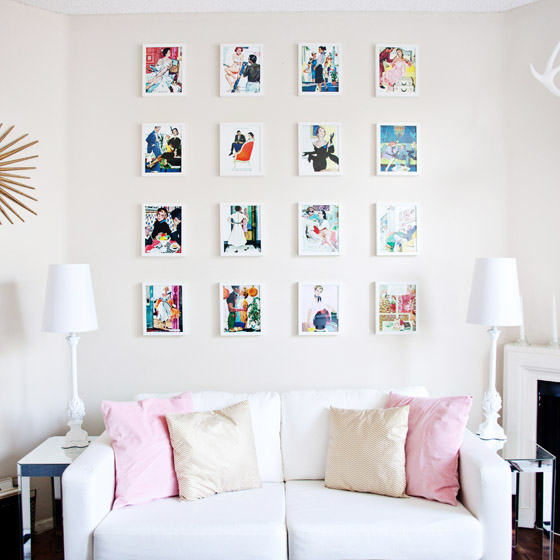
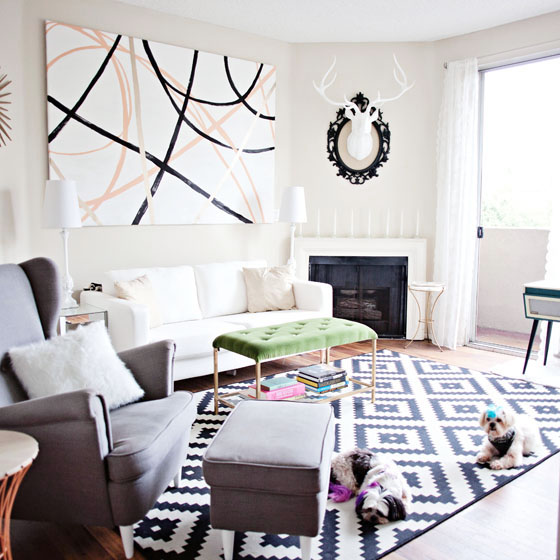
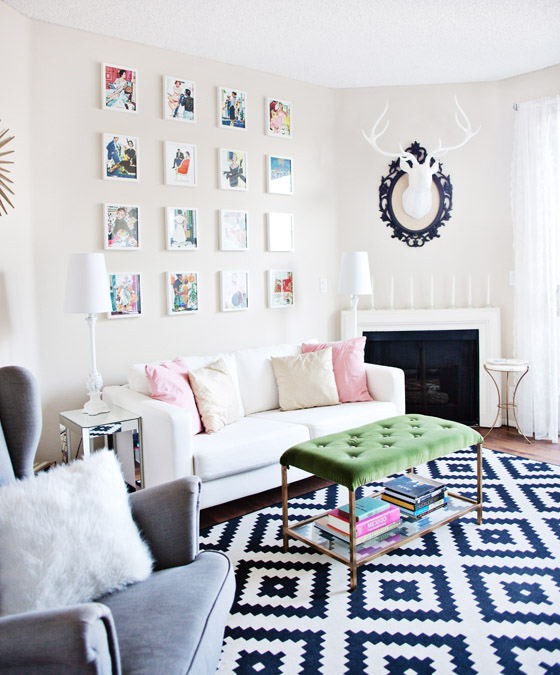
I’m always changing things up in this small, little apartment of mine. I was craving a little more color on my living room walls, so I planned on ditching the large abstract canvas and doing a gallery wall instead.

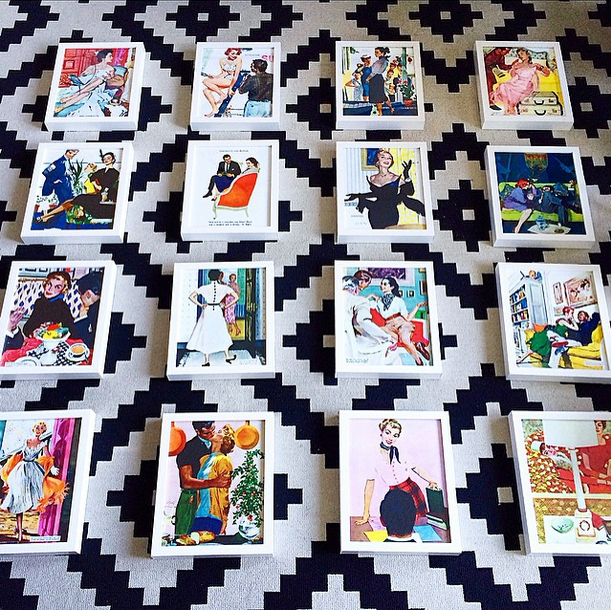
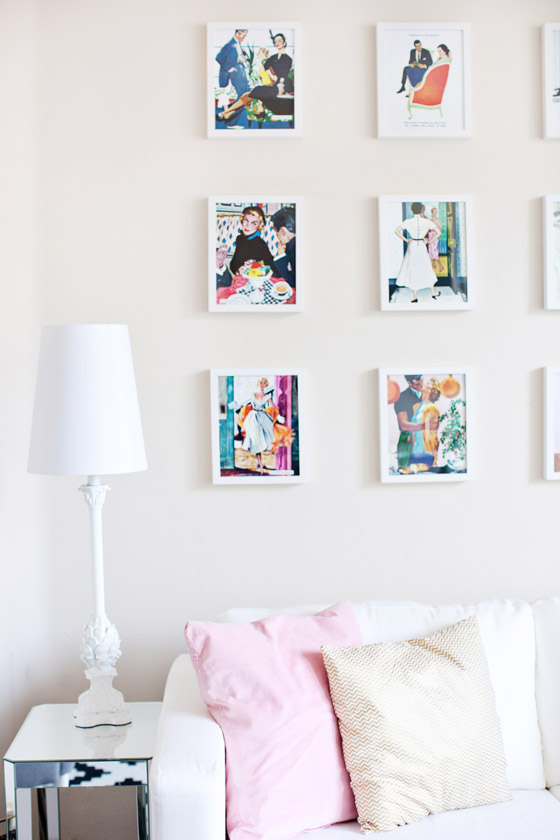
The LA Apartment of Melodrama blogger Krys MeloI’d been thinking about doing a gallery wall for awhile but art, even prints in the quantity I needed, were turning out to be too expensive for my project’s budget. I’m a big fan of vintage illustrations like the kind you’d find in The Saturday Evening Post, so when I came across a bunch from the 1950s, I ran to get frames immediately. Ok, more like power walked.

Framed vintage illustrations for gallery wallGallery walls can be scary! Whether you’re doing a random pattern or lining them up strategically, putting that first hole in the wall is scary business when you’re not sure if you’re going to like how it’s all laid out once it’s up there. I hate patching nail holes more than anything, and I don’t even know where the touchup paint is, so I had to get this right the first time.

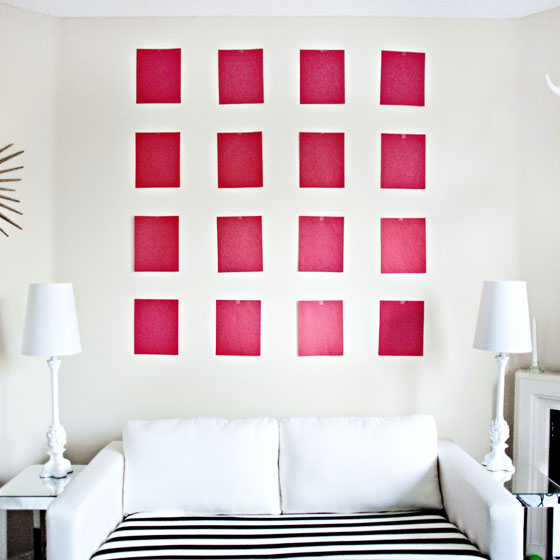
Gallery wall tip - Use paper cutouts with nailholes marked first to get the right arrangement without putting unnecessary holes in your walls

One of my favorite tips for creating gallery walls is to cut pieces of paper to the size and shape of your wall decor. Mark where all of the nails should go, and tape the paper pieces up on the wall to get a better idea of where everything will go. I rearranged my pieces at least 4 times until I got a spacing I was happy with. Measuring is fine, but I like to actually see everything up on the wall before I start making holes. Once I was happy with it, all I needed to do was hammer the nails into the pre-marked paper.

Vintage Illustration Gallery Wall from Melodrama

I hung every picture up and used a level to make sure they were all straight and in line, because when one is out of place everything looks wacky. That’s something I’ll probably have to go back and do every once in awhile but it’s SO WORTH IT. If you have a problem with your pictures staying straight, try using a little piece of gum tack on the back corners of the frame.

Vintage Illustration Gallery WallThe illustrations add a lot of fun color and fun vintage character into the room. I’m definitely happy with it.

Vintage Gallery Wall from Melodrama blogger LA Apartment

DIY: IKEA VITTSJÖ Table Turned Chic Cocktail Ottoman

I have this problem where I envision something that I want and either it doesn’t exist or the closest thing I can find costs, like, a million dollars and still isn’t exactly what I had my heart set on. I have another little problem where I see something generic in a store and immediately start planning how I could change it to fit my personal style and make it, well, less generic. This happens way more often than you’d think. I’m all “Blahblahblah we can paint it and then cut this off and then maybe screw these together…” My husband stares at me for awhile before voicing his concerns, which I usually just brush off, and reply with a casual “It’ll be fiiiiine.”

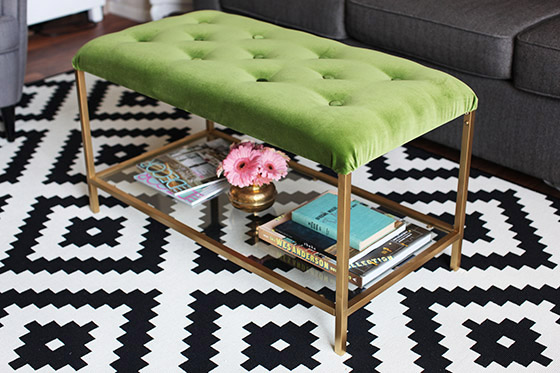
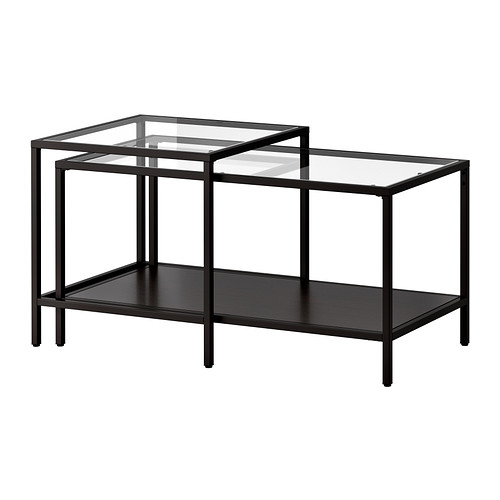
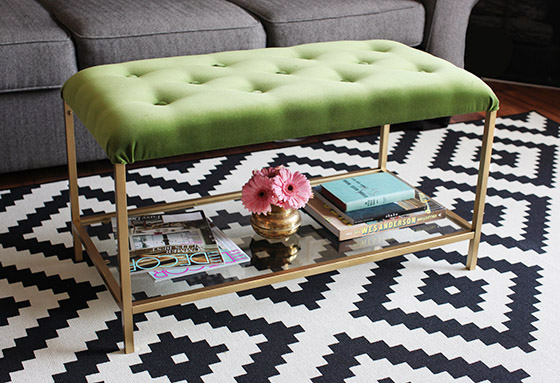
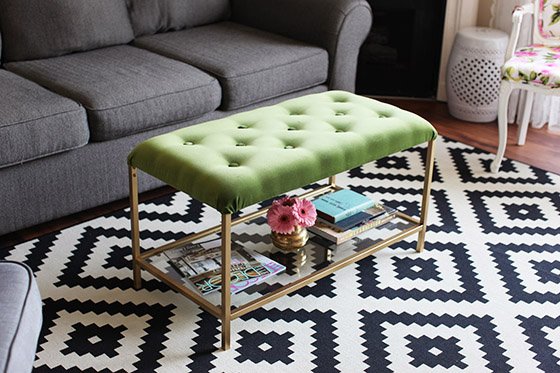
And that’s what happened this time. I wanted a cocktail ottoman to use as a table and footrest, in some great color, probably tufted, with a little gold to tie in with the rest of the room. Couldn’t find it. When I saw the surprisingly sturdy VITTSÖ nesting tables at IKEA I instantly knew how I was going to make it happen. I would just need to upholster…and paint…and drill a little. NO BIGGIE. No, seriously, it’s a lot easier than it sounds.

vittsjo-nesting-tables-set-of-__0135349_PE292040_S4
I’m saving the smaller one for later.

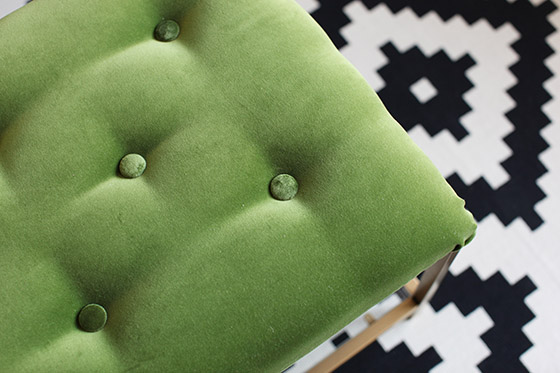
Finding the perfect fabric was actually the most annoying part. I went to 4 different fabric stores before I found the perfect  green velvet at Deco Home for $80/yard. Totally worth it. It’s durable and lovely and perfect for a project like this. Exactly what I wanted.

ANYWAY, I’ll get down to it.

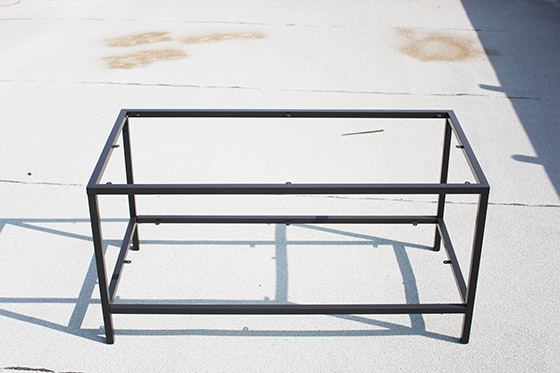
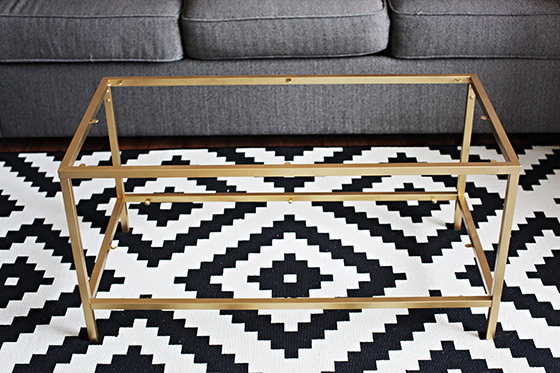
I put together the frame of the table and sprayed the entire thing with metallic gold spray paint. You can use whichever gold you like.Step1

I sprayed all the hardware and those little glass cushion sticker things gold, too.

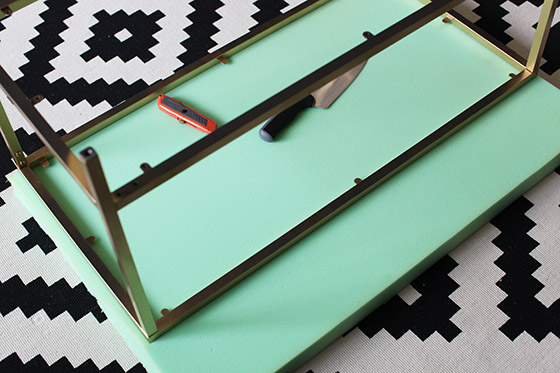
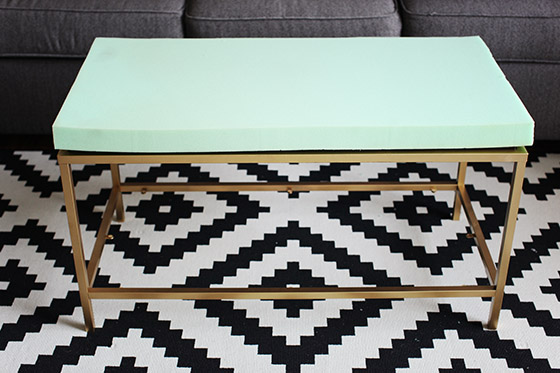
Step2I picked up one yard of 2″ thick foam from the craft store and cut it to the size of the table. Using a sharp knife or blade makes it super simple. Just run the blade through a couple of times. You should maybe put cardboard or something down so you don’t slice up your floor.

Step3 Step4

The larger table in VITTSJÖ nesting tables set has a glass shelf on the top and a wood (MDF) shelf on the bottom, but since this is a hack, I switched them. Why? Because I needed to use the MDF for upholstering and tufting purposes. The glass shelf would be for holding books and cute decorative items while keeping a clean, floaty look.

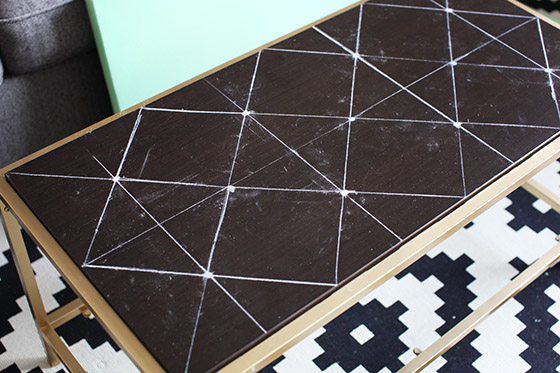
After that I did some really annoying measuring and marked where I wanted my buttons to go. Ugh. Math is hard.

Step5

Then I used the multi-purpose drill bit on my Dremel to make the holes where I’d be pulling my tufting cord through.

Step7

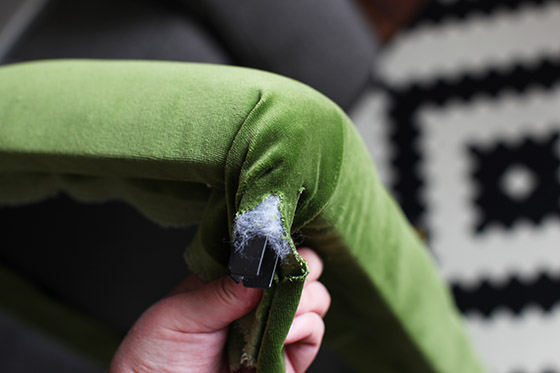
I covered the foam and board in batting and my velvet. I pulled the fabric tight enough to round out all of the edges. The corners were tricky because of the metal nub where the top connects to the rest of the table. I just sliced the corner piece of fabric, pulled the fabric back around the piece of leg, and then stabled it securely into place. When I connected the pieces back together I just tucked any raw edges that were showing.

Step8

At this point you can leave it how it is or you can get fancy with tufting. I did a shallow tuft since this will be used as a table sometimes and I don’t want my serving trays to lay all wonky and wobbly on top. I also don’t want to be digging crumbs out of deep tufting craters after every shindig.

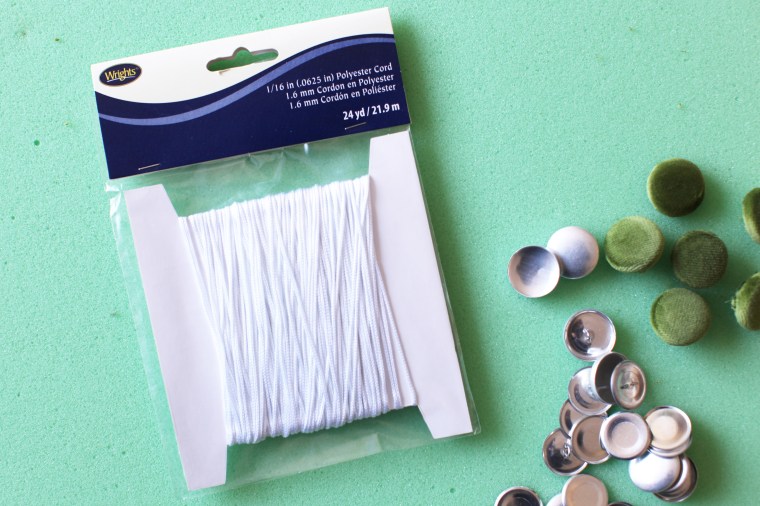
Tufting supplies will include polyester cord, a large upholstery needle, and some button covers
in the size of your choice.

Step9

These regular button covers are fine but if you’re using a thick fabric you might need to put in a little extra effort.

Step10

Instead of securing the fabric with the back of the button like you normally would, you might need to sew the fabric closed on the back using a heavy duty thread. I use “outdoor coat” thread. It works perfectly.

Step11

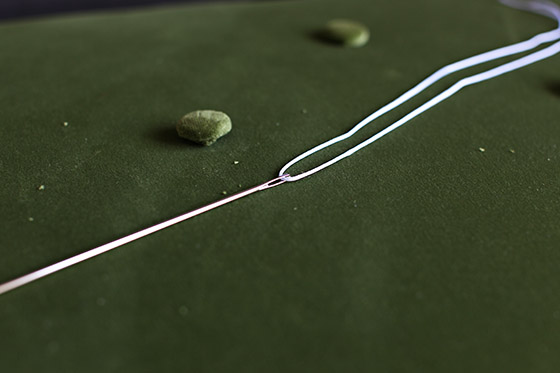
Thread a large upholstery needle with the polyester cord.

Step12

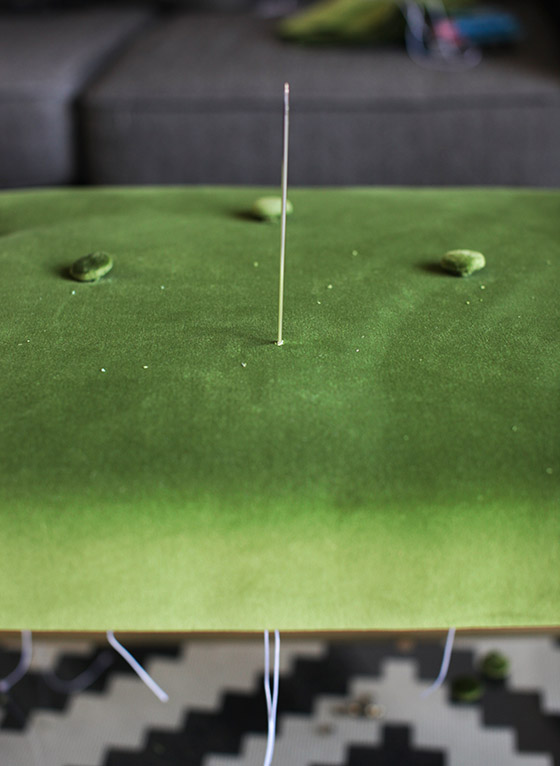
Find your holes on the bottom side of the board and push your needle through as straight as possible. Pull one end of the cord through to the top.

Step13

Use the needle to go through the back of the button and pull the end of the cord through.

Step14

Then put the needle back through the hole to bring the cord end back through to the bottom side.

Step15

Step16

Pull the cord tight and secure with staples. Stapling in multiple directions makes sure it doesn’t slip over time.
Step17

See? Shallow tufting.

Shallow Tufting TutorialNow it’s the best ottoman ever.

VITTSJO Ikea Hack VITTSJO IKEA Hack VITTSJO Ikea Hack VITTSJO Ikea Hack

Home Decor: New and Improved Dining Banquette Ikea Hack

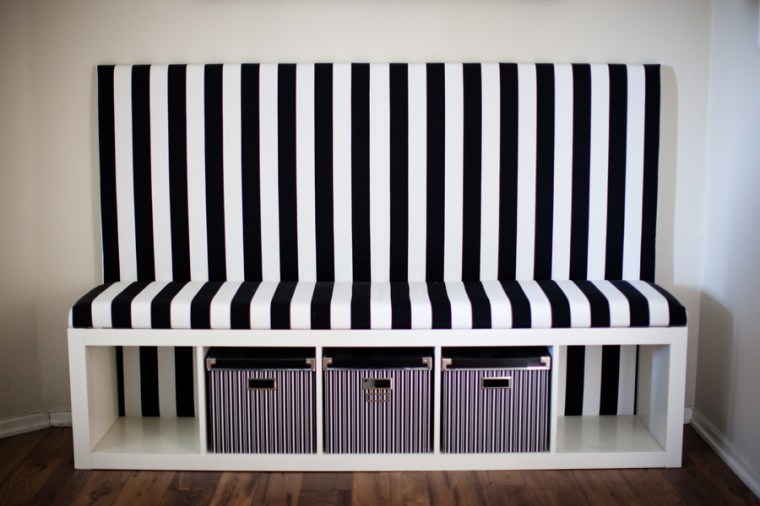
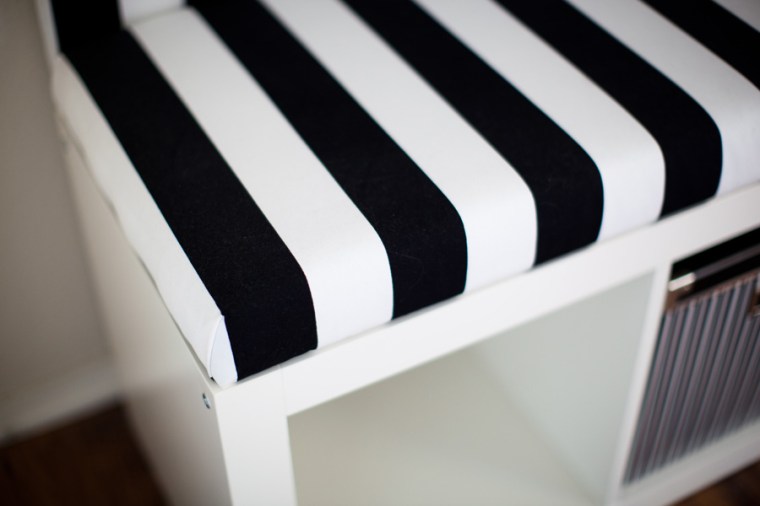
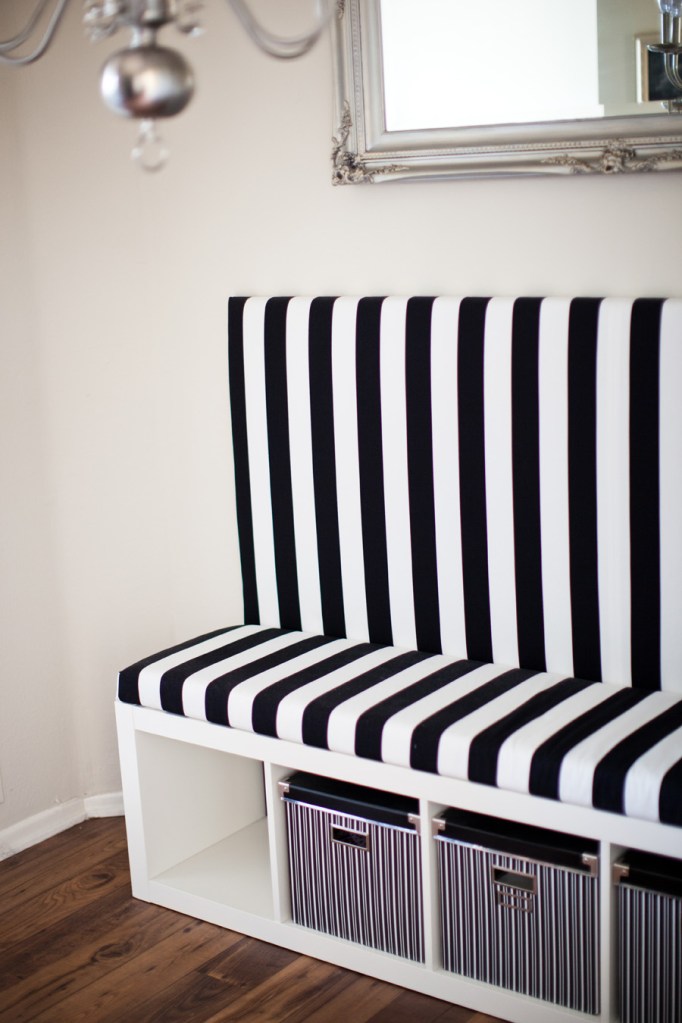
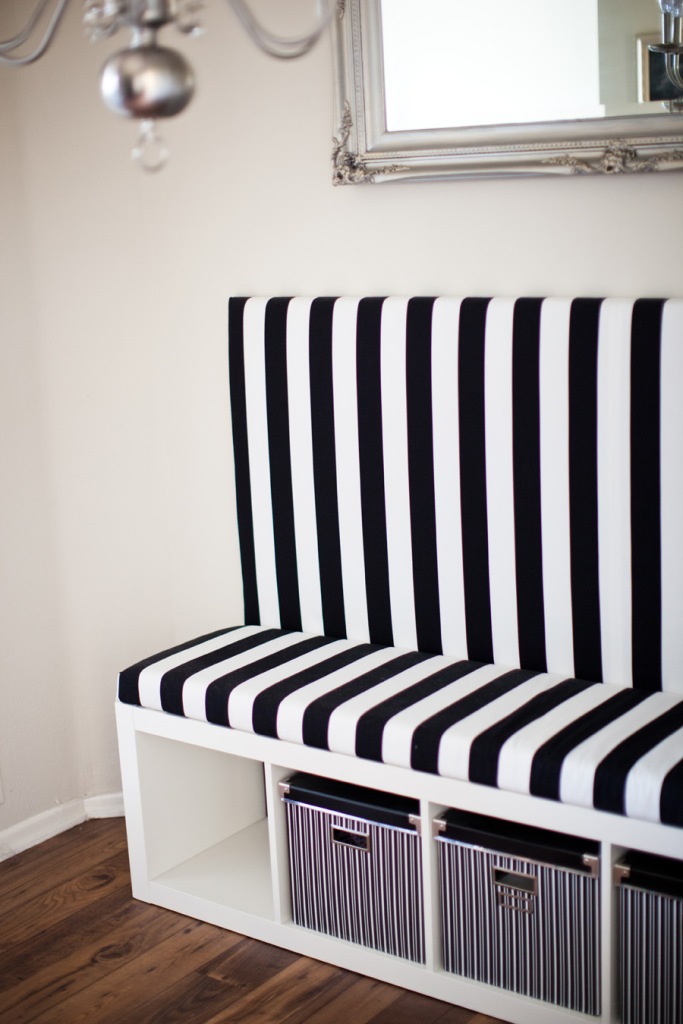
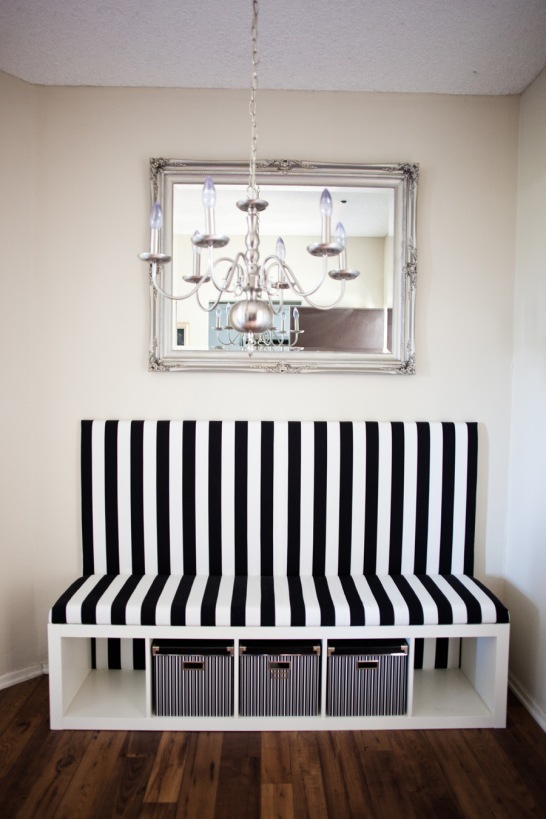
You guys, I have slacked on updates for you. I am the worst. Remember that banquette I made awhile back (last year)? Remember how I wanted a different fabric and planned on changing it? Yeah I changed it…like…forever ago. The new canvas goes so much better with my original vision inspired by my favorite cafés in Paris and my own personal style. I’m hoping to score some new furniture and accessories for the new look too.

TADA!

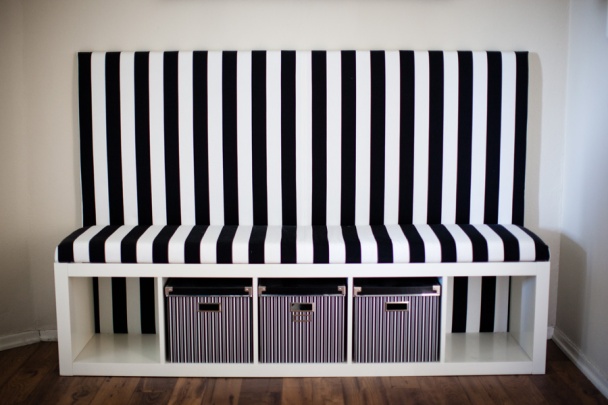
Striped DIY Banquette-Ikea Hack

DIY Banquette Seat Ikea Hack DIY Banquette Ikea Hack

Ikea Hack Dining Banquette

I got this fabric at Ikea for $8/yard. It was fantastic to work with and is exactly what I originally intended for this piece.

Head over to the original tutorial for instructions on how I hacked this Ikea Expedit bookcase.

DIY: Banquette Seat EXPEDIT/KALLAX IKEA Hack

And the dining room saga continues…

Because we have a small awkward space, I thought it would be a good idea to use a banquette style seat to complete our dining set. I’m that person who always requests a booth at restaurants, so I was set on it. We shopped around for one but none were right for us. The size, color, style, and price were always off. I started thinking about how I could pull off a DIY version. I thought about using kitchen cabinets or building a frame like the kind I’ve seen in custom kitchens, but Jvee said NO. We don’t have the tools or the space to pull that off. During a trip to IKEA, I noticed one of the EXPEDIT shelving units was turned on its side (I’d seen it used before as window and bench seating) and seemed durable enough to sit on. It measured at the right size! And it had cubbies! We bought it. [Note: The EXPEDIT has since been replaced with the KALLAX.]

I immediately thought of how I was going make the back for it. I wanted it to be comfortable to lean against and high enough to make a statement. A few years ago we made a DIY headboard for my cousin’s room using plywood, foam, and fabric. That’s how I was going to do it. So simple!

I started with a 4’x6′ piece of plywood. I padded it with 1″ thick foam and covered it with batting. My indoor/outdoor canvas fabric measured 55in wide, which would have been fine if I wanted to run the pattern horizontally. Since I wanted to run the pattern vertically, I needed to cut 2 pieces of fabric to 4 1/2 feet long and sew them together at the selvages, being sure to match up the pattern. I made sure the seam ran down the center of the board.

I started by placing a staple in the middle of each end of the plywood, pulling the fabric taut, and then working my way around with staples to secure it. You can use flushmount brackets to secure the piece to the wall if you want. We felt the EXPEDIT was heavy enough to hold the backboard up, so we decided to forget that step. If you have kids or want the peace of mind, by all means mount it to the wall.

Now it needed a comfy seat! My first plan was to sew an entire seat cover for the foam, but I decided against it. Mostly out of laziness. I considered upholstering the top (side) of the unit like you would a chair, but ultimately I didn’t like the idea of messing it up with staples. That’s when I stumbled across similar types of projects on Pinterest that used a piece of MDF board. Genius! I didn’t screw the MDF into the EXPEDIT because, again, I wanted to preserve the bookcase. But, if you have kids I recommend securing it. I also decided against legs so it’s sturdier by being directly on the floor. We don’t use this piece every single day, but we’ve had game nights and dinner parties and it has successfully held 3 full sized adults with an estimated combined weight of at LEAST 400lbs, several times. Obviously the risk is all yours.

I had the piece of MDF cut to the right measurements at Home Depot and covered it with 2 inch thick pieces of foam and covered it with batting. The 2 inch foam added to the height of the EXPEDIT brings the seat height up to 19 inches, which happens to be the exact height of our dining chairs.

Then upholstered like you would a chair seat. Upholstering pieces like this is super easy. It’s like wrapping a present but with fabric and staples inside of paper and tape. It’s really that simple. Promise!

I added the pillows that I made with the left over fabric pieces for extra lumbar comfort. Look how perfect the cubbies are for storage boxes! [Edit: The fabric has since been changed to the striped black and white fabric I’d been looking for.]

Ahhh yes, restaurant style banquette seating. Yay!

Edit:

I wasn’t planning on sticking with that fabric and I’ve since changed it. I found the perfect black and white striped fabric that I’d had in mind, at IKEA, for $8/yard. Find the updated look that was inspired by my favorite cafes in Paris, below:

Striped DIY Banquette- Ikea Hack

DIYBanquetteIkeaHack

DIYBanquetteSeatIkeaHack

Ikea Hack Dining Banquette

See! It’s totally versatile and easy to change when you get the whim.